
The Social Politics of Drink Orders
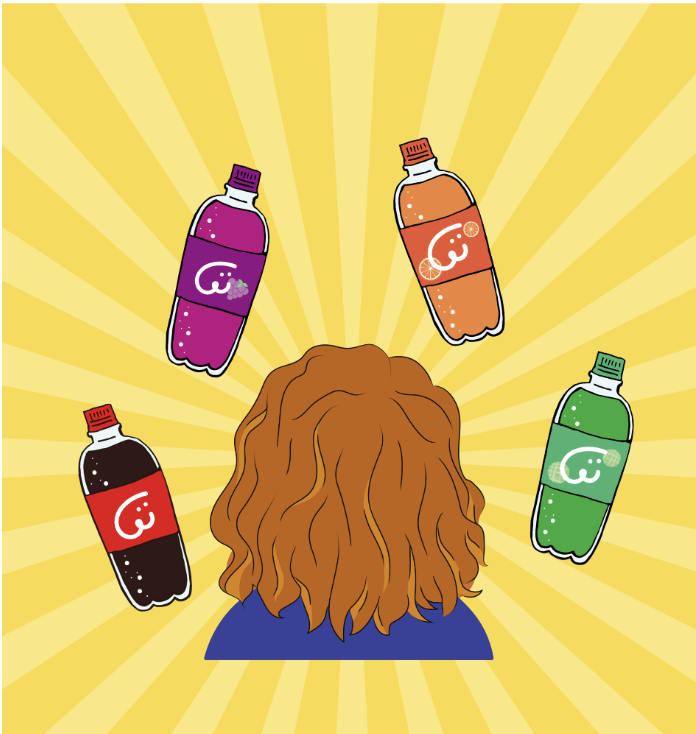
The Social Politics of Drink Orders
By lindsay gould
We’ve all been there. You’re out to dinner with friends—maybe it’s a birthday, maybe it’s just one of those “we should really catch up” nights that somehow always involves sharing fries. You slide into a corner booth with felt seats that have seen better days, under lighting so dim it feels intentional.
The waiter walks by with a notepad and the well-rehearsed smile and asks, “Can I get you guys started with some drinks?”
And suddenly, everything stops.
There’s a pause. A collective inhale. You take a hesitant glance around the table, trying to read the room. Is this a water table? A soda table? A “just tap water with lemon” kind of group? Curious looks are exchanged. Someone raises their eyebrows. Someone else subtly nods.
It’s less about thirst and more about reading social cues. We’re not choosing drinks. We’re taking attendance, tallying votes, and quietly deciding what kind of people we’re allowed to be for the next two hours.
Then with a sly grin, and the slightest confidence boost imaginable, your friend says, “Can I get a Shirley Temple?”
Instant relief.
My heart rate lowers. My shoulders relax. I feel both joy and validation flooding my body all at once. Relief that I wasn’t the only one considering an avant-garde beverage choice. Joy that now, socially speaking, I am free. Free to say, “I’ll have one too.”
That feeling shouldn't be that deep. But it is.
I feel like this is a common experience for any teenage girl. Yet, just as universal is the opposite scenario. You’re ready to order something fun. You’re imagining the carbonation, the grenadine, the tiny cherries at the bottom of the glass. And before you can even process the words “Diet Coke” or “lemonade” in your mind, the person in front of you says, “I’ll just have water.”
Water. Like, seriously?
And yes, logically, I could still order the Shirley Temple as nothing is physically stopping me. But something about being the only one ordering a fun drink feels almost embarrassing. It’s some weird, unspoken Gen Z social rule: if no one else does it first, you don’t want to be the outlier.
I hate ordering first for this exact reason. Ordering first feels dangerous because it removes the safety net. There’s no data yet. No precedent. You’re exposed without knowing whether the group will follow or abandon you. Because the only thing worse than not getting the Shirley temple you wanted is ordering first, and then watching everyone else follow with “just water.”
No one would actually care. No one thinks about my drink choice for more than half a second. But that’s not really the point, is it?
The real question is: why do I feel like this at all?
It’s groupthink in its most harmless form. No one’s forcing you, but somehow, the pressure is still there. I feel more secure in my decisions, no matter how small, if I know the majority has already deemed them acceptable. I want confirmation before I act; a green light from the table. I’m wishing for silent approval and proof that I won’t stand out too much.
Somewhere along the way, we started needing other people to act first before we gave ourselves permission to do something slightly out of the norm. As a generation, we’ve slowly handed over our sense of individual agency and have begun to lean on verbal and emotional crutches just to get through the smallest decisions.
But it wasn’t always like this.
At one point, you could wear your bedazzled, light-up Skechers with green leggings and a purple monkey shirt simply because you wanted to. I would have died in elementary school if my mom told me I couldn’t have my Minion backpack or dress as a Rubik’s Cube for Halloween (unfortunately, this is a true story. And no, you cannot see photos.)
We used to live and die by our own voice. Our creative world was loud, chaotic, and entirely ours. Then we grew up.
Suddenly, we noticed what the “cool” kids wore. How they spoke and what music they listened to, and even how they spent their free time. So we adjusted. We edited. We tried to blend. We wanted acceptance more than authenticity and instead of building our own foundation, we waited for someone else to lay it for us. We wanted the invisible framework of approval to already exist—stable, tested, socially acceptable—so we didn’t have to risk creating something ourselves.
That’s how you lose your sense of “you.” Not all at once, but slowly, in tiny choices. In what you wear. What you say. What you order to drink. We need to reclaim our agency.
I’m exhausted by the lingering haze of anxiety that shadows my interactions because I’m constantly worrying about how I’m being perceived. If I’m honest, I probably filter more of my thoughts through the lens of “How will this look?” than “Do I actually want this?”
That’s not living. That’s performing.
We need to take charge of our own happiness. So, listen to that Norwegian psychedelic-pop band you found at 2 a.m. Watch the weird cooking videos from the girl with less than a thousand subscribers. Read the niche memoir of that seventeenth-century medieval architect. Wear the outfit you like. Order the drink you want. Take up space in your own life.
Joy doesn’t need consensus.
If you take nothing else from this, let it be this: life is too short to drink water when you want a Shirley Temple. Be the friend who unknowingly gives everyone else permission to do the same.
I’ll be right here, cheering you on from my corner booth, with extra cherries.
See you next week,
Lindsay Gould