
Relationships (In Theory)
Relationships (in theory)
Written By Lindsay Gould
College is this odd middle ground where nothing feels fully permanent, yet everything feels strangely significant. We’re surrounded by hundreds of people our age and somehow, out of all of them, a very select few become important. Some stay, some don’t, and some change us without even realizing it.
I feel there’s a particular kind of clarity that comes with being 20. You’re old enough to look back at who you were at 17 and recognize you’ve grown, but young enough to know you still have a long way to go. You’re learning how to balance independence with vulnerability, friendships with boundaries, and your hopes for the future with the reality of the present.
Between the rush of semesters, the long nights, the unpredictable friendships, and the emotions we often don’t know how to express, we end up searching for meaning in the people who cross our paths. So these theories I’ve collected aren't rules. They’re just ways of understanding why certain people matter, why others don’t stay, and why all of it still feels worthwhile.
These ideas help me make sense of the relationships that come and go during this chapter of my life. Maybe they’ll help you, too.
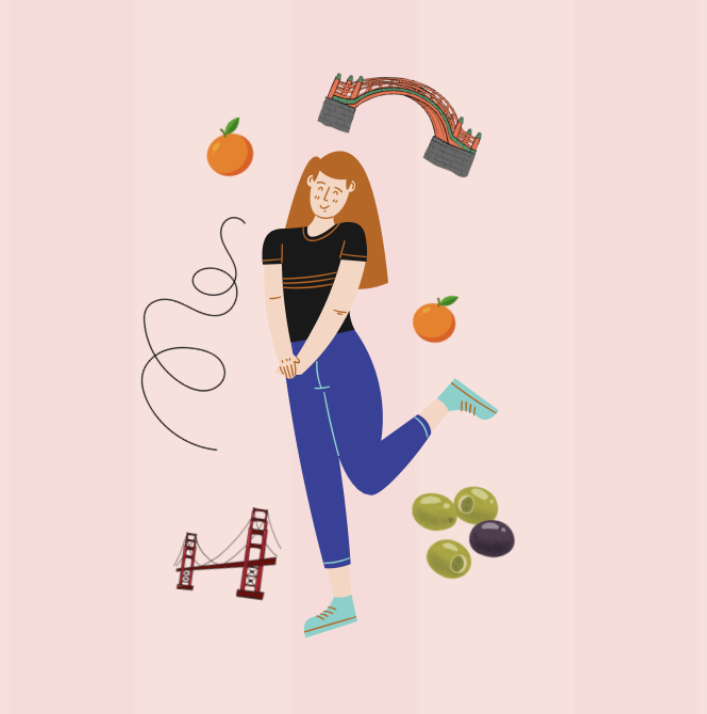
The Bridge Theory
Some people aren’t meant to stay forever. I know — tragic. But think of it this way: they were the bridge. They helped you cross from who you were to who you needed to become. And once you made it across, they didn’t vanish because they were necessarily villains or because the universe hates you, they simply completed their role.
Not every connection is supposed to be a lifelong contract. Some people are chapters, not the whole book. And that’s okay. You don’t demand a bridge to follow you to your next destination. You honor it for helping you get across, then you keep walking.
College will hand you a lot of “bridge people” — don’t chase what’s already served its purpose. Let it be what it was.
The Olive Theory
Shoutout to How I Met Your Mother for this one. The idea is simple: if one person in a relationship hates olives and the other loves them, they’re meant to be. Cute, right? Opposites attract, balance, harmony, etc.
But here’s the real lesson: don’t avoid people just because your tastes don’t perfectly line up. Different hobbies, different music, different definitions of “clean room” — none of that automatically disqualifies someone from being a meaningful part of your life.
And tastes change. In the show, the girl Ted pines after the entire series, suddenly becomes obsessed with olives later on. That happens in real life too. You grow. You try new things. You evolve. You’re allowed to like something today and hate it next semester. You’re allowed to outgrow people or grow toward them.
No relationship should feel like a cage you can’t grow in. I’m only 20. I’m supposed to be changing.
The Orange Peel Theory
Picture this: you ask someone to bring you an orange, and they show up with it already peeled. Not because you demanded it. Not because you hinted. But because they thought, Yeah, let me make this tiny thing easier for you.
That’s love. Or at least, feeling seen.
It’s the “I know you can do it, but let me” energy. The kind of energy that makes independent girls like me malfunction. Because when you’re used to doing everything on your own, letting someone help feels like taking off armor you’ve worn for too long, hoping the vulnerable parts of you stay safe.
But healthy relationships are full of orange-peeling moments. Little acts of care that aren’t transactional, aren’t score-kept, aren’t dramatic. They’re just kindness, freely given. Learning to let people in is a skill and sometimes, you have to trust that if you fall, someone will actually catch you, unprompted and with arms wide open.
Probably holding a peeled orange.
The Invisible String Theory
This one’s for the romantics, the delayed-gratification connoisseurs, and anyone who's sensed the universe moving people around in their life like pieces on a chessboard.
The Invisible String Theory says that we’re connected to the people we are meant to meet long before we meet them. Timing is everything. You might not cross paths until the universe decides the moment is right. It’s only when you’ve learned the lessons, healed the heartbreaks, and taken the necessary detours, that you can finally be the person you’ve always wanted to be.
Sometimes you meet your future bridesmaid in a dorm laundry room at midnight. Other times you bump into someone in the hallway and years later realize, Oh, that was the start of something.
Every delay, every setback, every weird coincidence, just might all be pushing you toward the people who will matter most.
So be grateful for the relationships you have now, but don’t panic like you’ve already met everyone important to your story. You haven’t. There are people you'll love deeply that you haven’t even stood in line with yet. Songs you haven’t discovered. Foods you haven’t tried. Memories you haven’t lived.
Trust the timing. You’re exactly where you’re supposed to be.
At 20, I don’t know much about the world, but I do know life is full of people who shape us in ways we don’t always notice until much later. Some are bridges, guiding us across moments of growth. Some are mirrors, showing us what we like, what we don’t, and how much we’re capable of changing. Some quietly peel oranges for us, showing care in ways words can’t capture. And some are connected to us by invisible stings, appearing at exactly the right time.
The truth is, every connection has a purpose, whether it lasts a week, a year, or a lifetime. The people who matter will teach you, challenge you, and help you grow, even if their role eventually ends.
So honor the bridges, notice the small gestures, and trust the timing of your life. Every person you meet, every moment you share, is part of the story you’re still writing.
Cheers to the chapters that end and to the ones just beginning,
Lindsay