
The Gatekeeping of Horror
The Gatekeeping of Horror
Written by Olivia Flanz
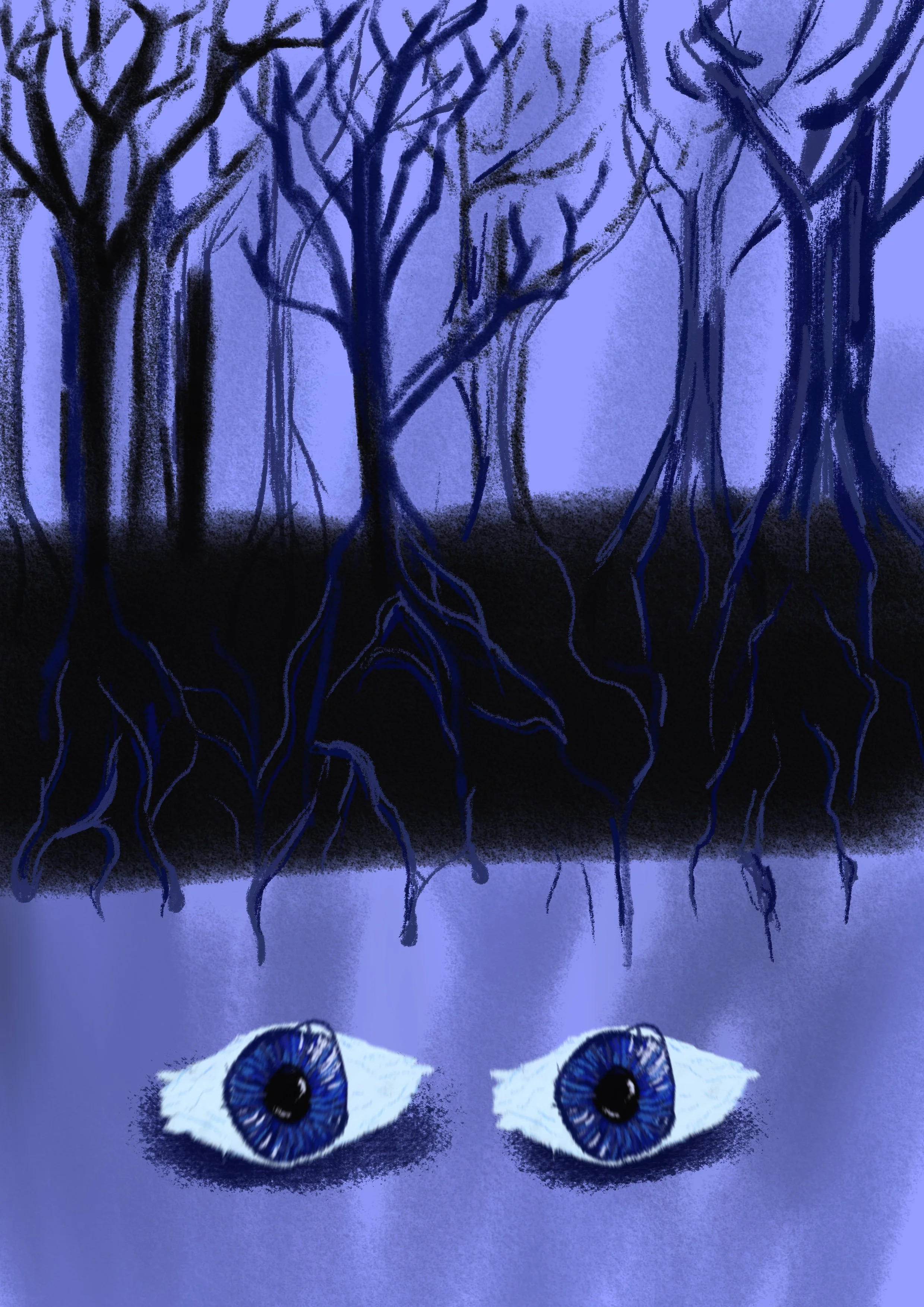
Art by Izzy Maher
Recently, I watched The Blair Witch Project. I had very low expectations of the movie, because people who’ve watched it before often called it “boring” and said “nothing happens until the last 10 minutes.” While things do heat up at the end of the movie, I would never describe it as boring. The viewer feels they are a part of the group, with it being from the camera’s point of view, and you feel sick to your stomach as you watch the group fall into despair as they get further and further lost in the woods. I was talking to my friend about the revelation I had about the movie, saying I wish I could’ve watched the horror movie sooner, and they replied, “Yeah, it’s a good thriller movie, but I wouldn’t call it horror—it just wasn’t scary.” Now, keep in mind, this movie is about a group of people making a documentary about a witch that haunts the forest, and the documentarians get lost in the woods and end up being hunted by said witch. Does that not sound like horror to you? Sure, I didn’t go to bed not being able to sleep, but does the scare factor really determine what is considered undeniably “horror”?
So how do we traditionally define horror? We think of the supernatural horror and the “real” horror. Some movies stick solely to realistic possibilities (which in itself can be terrifying because it could happen in real life, like the movie Hush), while others play with the supernatural. Horror movies are meant to awaken a sense of fear and dread. Traditionally, with horror movies, we think of jump scares, not being able to sleep after, and that lingering fear that stays with you after watching one.
Of course, not every horror movie is going to create that reaction, and sometimes a horror movie is going to need more than a couple of cheap jump scares to actually create “horror.” The Conjuring and The Ring have many jump scares, but they were used wisely. They were well-timed, created unpredictability, and let the tension build and the atmosphere of the movie do its thing in order to make the jump scares worth it.
But some movies don’t even bother using jump scares.
Hereditary, which, in my opinion, is one of the best horror movies out there, creates horror without really using any jump scares throughout the movie. It mixed real dread in with horror, (SPOILERS AHEAD) like early on in the movie, when a brother is speeding down the road to get help after his sister went into anaphylactic shock. Her head is out the window, trying to get any air she can, and the brother hits a pole in a rush, decapitating her. The whole scene is literally imprinted into my mind, even though I watched this movie years ago. The movie just lets the scene happen, drawing out the slow dread of the incident happening, and the slow realization of what he has done. How he drives home with his sister’s corpse in the car, out of shock, and just gets out of the car and goes to bed, to wake up to the screams of his mother. This all happens before the movie delves into the supernatural elements, blending realism and psychological horror, relying on the horrors of trauma, grief, and guilt. The slow-burning tension and disturbing images of Hereditary are what make the movie so terrifying.
But the thing is, though I think Hereditary is a great example of what a horror movie can be, there are movies that didn’t keep me up at night, yet I still believe they are great examples of what the horror genre can create. This can be seen in Sinners, which people also debate whether it’s a horror movie or a thriller. Going into Sinners, I knew it was a horror movie; I watched trailers before where it was obvious that was how the movie was being advertised, and I was very excited going into theatres last May to watch the film. But for a good half of it you almost forget you are watching a horror movie. You are introduced to all these great characters—really get to know and get attached to them. But when you start to notice the “horror” aspects of the film creep into the latter half, you remember what kind of movie you are watching and realize none of the characters or their relationships are safe. There is that dread that stays with you throughout the rest of the movie.
I applaud Sinners for expanding what the horror genre can do since it focuses on creating a compelling narrative over cheap writing with horror aspects. I feel like the problem with the horror genre is that writers focus so much on shock value that they forget to actually make a good movie. Sinners to me had it all. It was funny, it had romance, it built important relationships and friendships that made you root for the characters, the music was unreal, and yes, it also had horror. From what I saw, people walked away from Sinners either loving the movie or just not getting it, but the Southern Gothic film that Sinners was, to me, is exactly what it was meant to be.
Some argue that some of the horror aspects of the movie were “campy,” but personally, I think it was supposed to be that way. First of all; vampires—yeah, it’s going to be campy. Second of all: Scream—which no one is ever going to deny is horror—is one of the campiest horror movies out there, yet is still seen as a classic. I don’t think campiness in horror is a bad thing, as it is honestly just another aspect of the genre, but gets dismissed when viewers are only watching horror on that scare-factor-basis.
Horror is considered one of the most subjective genres, but I think that only happens when we are basing the quality of a movie on what terrifies one person and bores the other. Maybe genre classification shouldn’t depend on audience reaction, but on authorial intent. To me, Brokeback Mountain is a horror movie, but I am not going to write an opinion piece, screaming out my lungs that it’s a horror movie, because it’s not. Some aspects of horror undeniably belong to the genre—whether we find them scary or not. The danger of gatekeeping what movies can be “allowed” into the horror genre only dismisses so many movies that might not keep you up at night, but are still great movies. Especially when horror movies are expanding the genre and trying new things, they should be applauded, because so much of horror has already been done before. We should be uplifting movies that are experimenting with the horror genre, even if it’s not seen as traditional horror.