
Money, Money, Money, Must Be Funny, In Ticketmaster's World
Written by Sam Shipman
Photographed By Sam Shipman
Any good marriage to live music demands the inevitable affair with Ticketmaster. Since 2021, I have been inching steadily closer to the milestone of 200 live musical performances, having personally attended shows ranging from King Crimson’s final tour, four Clairo concerts, 10 Phish concerts, two Tyler, The Creator concerts, and shamefully, Undertale LIVE and Machine Gun Kelly performances. And throughout it all, it’s Ticketmaster who always holds my hand, leading me to my seat before the show begins.
We all know the drill: Click, swipe...“Samuel, you’re in!” When you buy the ticket, “Your Event is Happening Soon—Here’s how to access your mobile tickets” a couple of days before, and of course, when you arrive, the barcode the person scans with their little thing, and boom—walk in and enjoy!
But that cutesy seamless process comes at a cost: live music is a monopoly, and everyone knows it.
Any decent news consumer might have already heard about market inflation and the recent increases in bot usage, which can often make ticket prices skyrocket. If you don’t believe me, just look at Reddit, where users regularly complain about Ticketmaster’s outrageous “service fees.” As a journalist, I am lucky to occasionally avoid the scourge of ticket-pricing via press passes. It’s only when I’m sitting amongst the poor saps who spent hundreds of dollars on Boston Calling tickets that I begin to see the true problems of the Live Nation/Ticketmaster monarchy.
Those problems also come with a price: Water is $7, beer and mixed drinks are between $10-$20, and when you want to grab a VIP ticket for someone like Travis Scott, it ends up being roughly $800. (With an added bonus that Travis Scott will berate you in front of the whole crowd that he hates you for buying VIP tickets.) Regardless of how you want to tackle the modern concert experience, it’s clear that the different artists and genres attract various audiences. Whether it’s tweens tripping over themselves at J.I.D or retired rock stars bobbing their heads to the final Genesis tour, different age groups (and tax brackets) address the shows put on by our Ticketmaster overlords differently.
The only people who could possibly see more live shows than me are the actual people who work in venues. So I talked to some of them to tell me the type of concert-goers they’ve interacted with over time, in hopes of getting a better understanding of what type of crowd is going to different shows, and each crowd’s behavior in a concert setting.
Matteo Finnerty, a biology student at Boston University (BU), is often found working as a barback in the intimate walls of Paradise Rock Club, located on the edge of BU’s campus. Finnerty can usually be found running around with a case of beer to restock the supply of one of Paradise’s seven bars. According to Finnerty, the wide variety of music genres at the venue drastically influences the crowd he sees.
“I see a huge variety in terms of age and the way they present themselves,” said Finnerty. “In terms of politeness, there are some shows where people are awesome—they’ll move out of the way, they’re really nice to the bartenders, and they tip really nicely. And then there are other shows where people are just mean, won’t move out of the way, and they think they’re better than you.”
Finnerty says the primary distinction is age; the older people are generally nicer, and the younger people are not necessarily mean, but definitely wild.
“There are some shows where the median age is 15—thosenights suck,” said Finnerty. “Security was getting into little tussles with the crowd, they refused to move out of the way for me, towards the end of one night, for no reason at all, kids were chirping at me, shit talking me for no reason.”
That same attitude can also be found in Mansfield, MA, at the Xfinity Center. Alexander Giberson, a computer science student at UMass Boston, who worked as a sustainability coordinator sorting trash at concerts, recounted his time working at a 21 Savage show.
“21 Savage was basically all adolescent kids, and it was one of the few shows that we had a security issue because people were throwing hands,” Giberson said.
But it’s not just young people causing security issues; Giberson noted that the crowds for Phish were among the worst he’s ever had to interact with.
“They actually ended up breaking a fence because a bunch of them were hopping it, and eventually the fence fell down. No other concert-goers were doing that,” Giberson said, “They were definitely a bunch of people tripping out while the concert was going on, so it was extra hard to navigate. I remember distinctly these people would not move out of the way when I was moving a bunch of trash away from the venue.”
Even in classier settings like Boston’s Wilbur Theatre, people are still acting out. Sam Lawerence, a Journalism Student at Emerson College, works in the Box Office and as security at the historic theater. Similar to Paradise, the Wilbur gets all types of artists, but Lawrence doesn’t think the age of the crowd makes much of a difference in terms of behavior or how much they spend.
“Each crowd that comes it’ll have its outliers and it’ll have people who are acting inappropriately in the theater, but I don’t really think that’s reflective of the demographic, I think that’s just reflective of people,” Lawrence said. “Because at almost every single show we have there’s somebody that’s disrupting it, there’s somebody who gets too drunk, or just kind of disrupts the performance.”

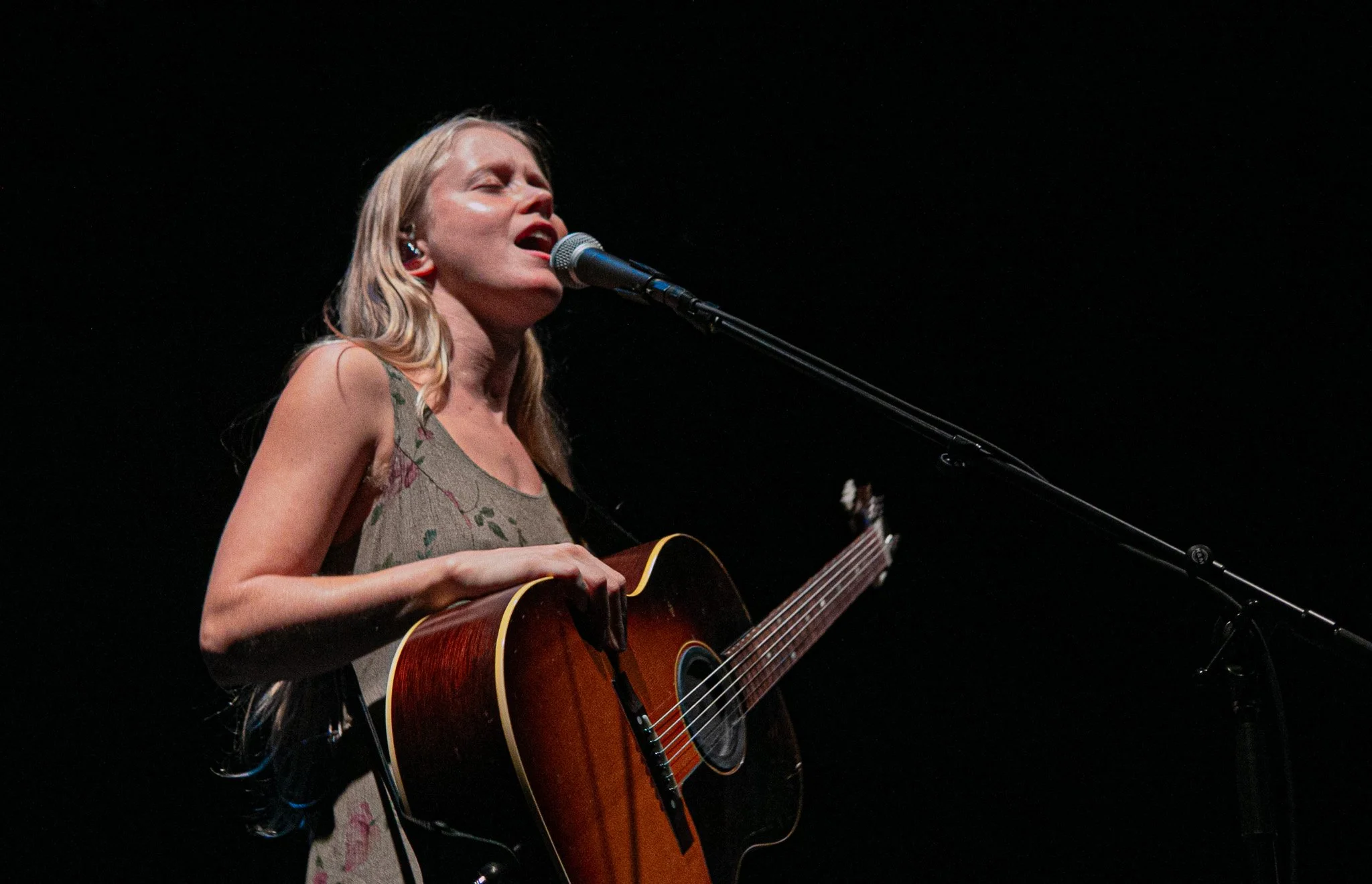
If it wasn’t already clear that Ticketmaster acts as entertainment overlords, the company also tracks the age and gender demographic of each artists’ fans, and this information is given to venues like the Wilbur’s staff before their work at each event begins. Lawrence, however, finds himself kicking out people of all ages and in every seating section, for things like vaping.
While talking about the types of event-goers Lawerence works with, he mentioned dealing with people who often purchase their tickets through third-party websites. When they approach him to experience that “easier” scan-in process, where Lawrence has to deliver the news that they actually don’t have tickets.
“An easy way to get around that is by coming directly to the box office because we can sell you a ticket through Ticketmaster,” Lawrence said.
But just remember...this oh-so seamless process is your only choice, and for the foreseeable future it will be your only choice to experience live events.
All three workers I talked to are Live Nation/Ticketmaster employees, and all three are routinely put in the same situation again and again. It doesn’t matter if you’re like Giberson, who personally wouldn’t spend more than $45 on an event, or one of those people who buys another several-hundred-dollar ticket on the spot at the Wilbur when their StubHub ticket didn’t come through in time. Whether you have just enough money to get into a show, mosh, break stuff, and insult the employees, or if you’ve got the funds to happily ignore Live Nation screwing you, nobody really wins except the people on the very top.
It creates situations like the one Lawerence told me happened to him during a shift. A man approached him saying, “In 1973, I bought a Led Zeppelin ticket for $3, now each of these tickets are hundreds of dollars.” Lawrence, a middleman for Ticketmaster, stared blankly back at him, unsure what to say. The man pointed out to Lawrence that we didn’t always have to empty our wallets for something we enjoy. It’s true. The price has crept up due to inflation, and it’s all because the same company that’s held our hand for years through this “seamless process” is now calling literally all the shots. From buying the tickets to owning the venues and even concessions, it’s Ticketmaster, every step of the way. So as I renew my vows with live music, I’ll always make sure to remember that whether it’s me, the youth, the wealthy, or the employees—Ticketmaster can take turns fucking us all.