
Feminism is the New Patriarchy
Feminism is the new patriarchy
Written by Molly Peay
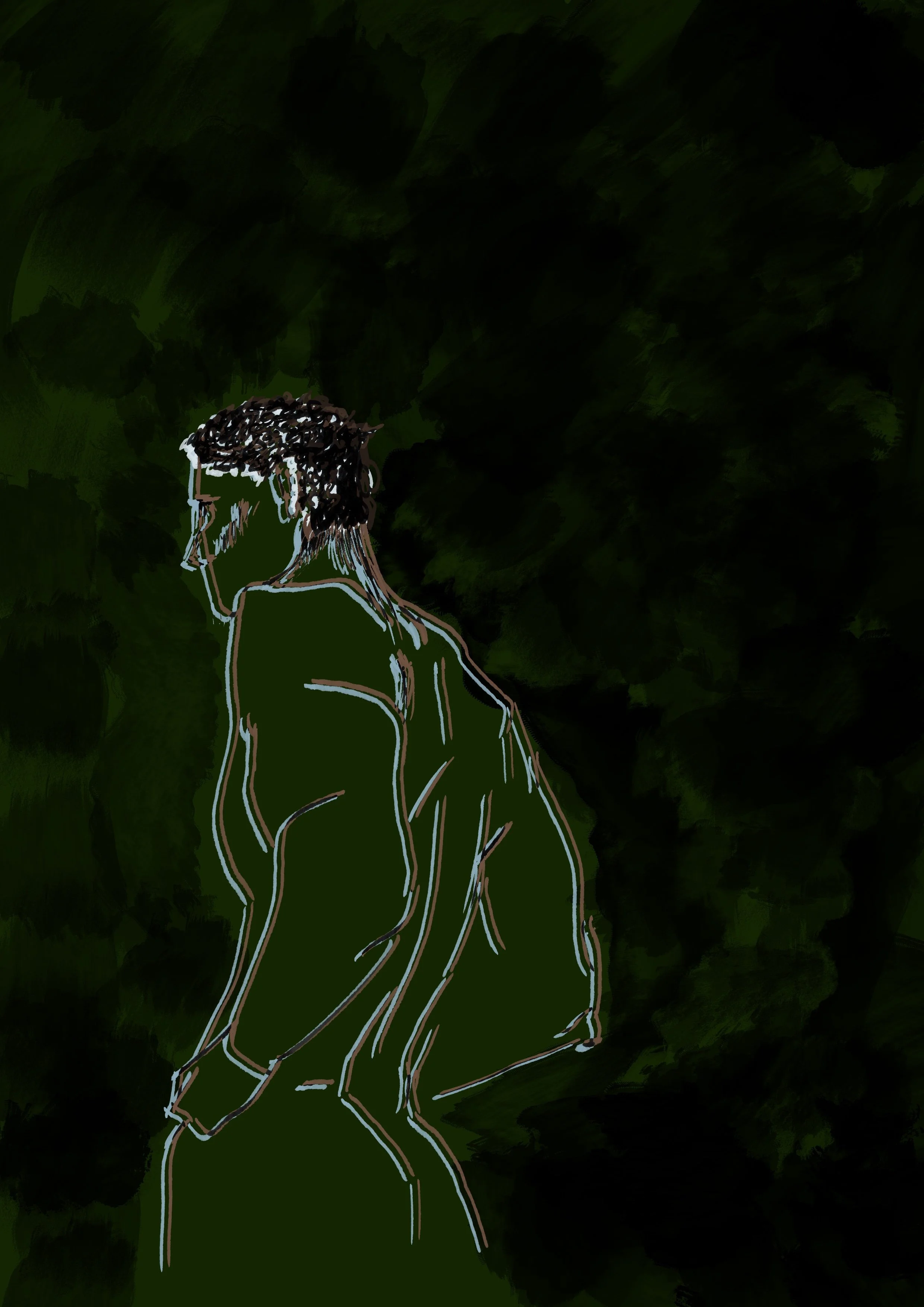
Art by Izzy Maher
A couple of weeks ago my friend and I were in Thinking Cup and she mentioned a new trend: Women in Male Fields. This trend includes satirical videos of women doing, or pretending to do, things men have typically done to women, such as ignoring his text but liking his Instagram story. However, there are some videos that are problematic, like catcalling men. A different and possibly worse example, a TikToker wrote, “While he was in surgery, I asked the doctor if he could add a pea-Nile implant for my pleasure. I’m sure he wouldn’t notice.”
It may be tempting to brush it off and say that women making jokes about sexualizing and objectifying men is harmless fun. After all, statistically, women assault men far less than men assault women (though this does not erase individual harm). So, perhaps, the threat is minimal. Still, I can’t help but question: If we women hate being sexualized, why do we perpetuate the same thing that hurts us?
As Audre Lorde, an American feminist and writer, puts it: “The master’s tools will never dismantle the master’s house.” Or, for a similar effect, “we cannot disrupt our oppression using the logic that justifies our oppression.” While flipping the script by joking about sexualizing or objectifying men can be satisfying for some, it doesn’t dismantle the underlying power structure or take back the power from those who actually hold it. Not to mention, the underlying goal of feminism is not to flip the script but be rid of the script altogether. Simply flipping the script does not itself achieve gender equality.
When we replicate the harassment, even satirically, we can normalize the harassment as acceptable behavior. I must point out that, yes, humor or satire can also be used as a way to cope or reclaim agency in the face of our oppression and abuse. And although this trend appears to stake these claims, create community with other women, and take back the tools with which women have been so systematically oppresed—sexually and relationally in this specific case—we are actually narrowing our parameters of change.
Good satire should hold up the mirror for all of society. It would point out that yes, men would not like to be catcalled because nonconsensual sexualization feels uncomfortable. It would also point out that it is tone deaf to make jokes about sexualizing or objectifying men in the same way men may have to you, especially because no woman or feminist I know likes or can take a sexist joke. It is also imperative to point out that this “satire” is only harming men and gender equality, not the patriarchy, and there is a difference to be made there.
In recent years, the sexualization and objectification of men has become normalized. Part of it occurs because there is an influx of thirst traps which seemingly invite users to sexualize bodies; at the same time, it is important to differentiate between a thirst trap and what is just a carefully curated pose (because social media apps necessitate curated feeds for monetization) exposing parts of their body. Regardless, I have increasingly noticed more women sexualizing men. One such example is when men are fancasted into books, and women seem to forget they are real people. This Women in Male Fields trend really just seems to be symptomatic of this shift in comfortability of sexualizing and objectifying men.
While for some, the act of sexualizing men can feel empowering and community-building in the moment, specifically because it is on social media, reversing roles fails to resist or productively challenge or change anything about power roles.
If we truly want gender equality, we have to think and act outside of the patriarchal parameters. We have to have different types of conversations. No reversals, no sexualization as commentary, no getting even with men by retaliating and treating them in the same way women have been treated. We must resist the age of digital conservatism.
Reacting to the patriarchy in the same way the patriarchy treats women is not radical, nor does it liberate us. Instead, it reinscribes the patriarchal frameworks that keep us oppressed and complicit.