
Dead Stuff
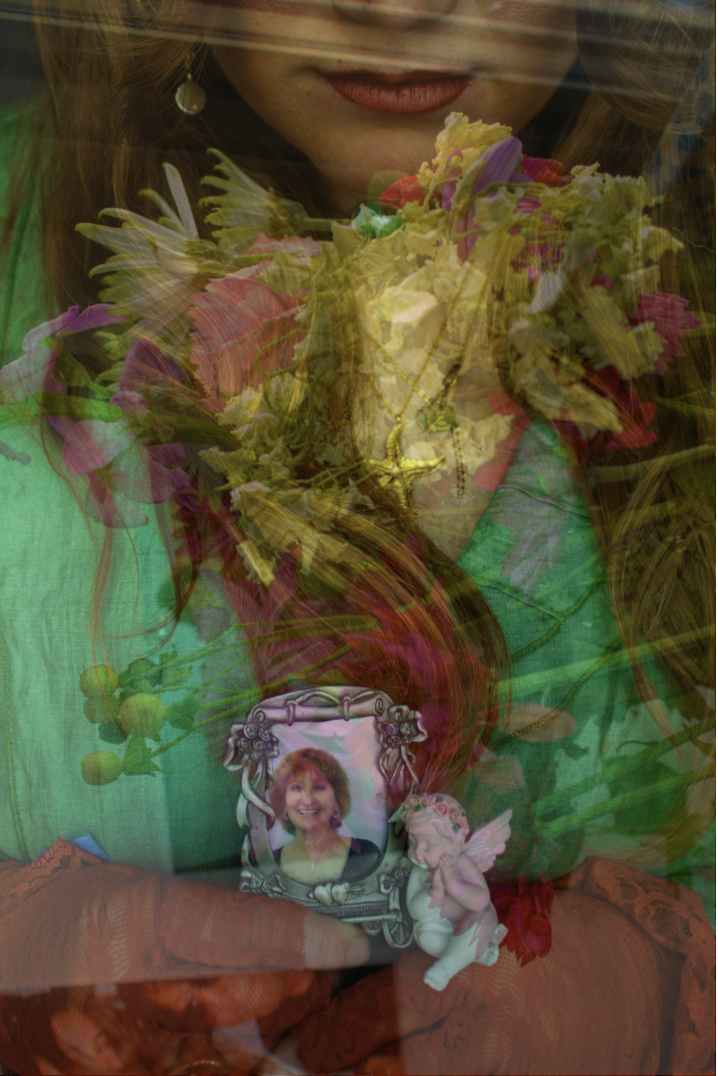
Dead Stuff
Written by Madison Lucchesi
Photographed by Emma Fisher
The first time I saw the shrine my aunt set up for my grandmother’s urn, I walked backward into a wall and started hysterically laughing because shrines and all kinds of “dead stuff”—ashes, bones, crypts, tombs, catacombs, and so forth—absolutely repulse me.
Yet, tears still welled in my eyes. I hadn’t been warned that the wooden box containing my grandmother’s remains found a home on top of a dresser in my aunt’s spare bedroom. Alongside the scarf I bought for her in Mexico that she wore daily—the scarf I thought would become mine as a way to feel close to her.
I loved my grandmother very much. We were best friends, but I loved her, not her cremated remains. So when the time comes that I inherit her ashes, since my aunt has no children, I will have someone else—God knows it won’t be me—sprinkle my Nonna under the raspberry bushes in her backyard where I spent summers weaving between thorn-filled branches to pick the reddest, juiciest lamponi.
While that decision seemed clear, I still have no idea what I will do with my relative’s belongings when they die, knowing my family expects that anything remotely sentimental gets saved.
My family is particularly morbid. Each “kid” has been assigned at least one parent, aunt, or uncle that they’re in charge of in their old age. I am in charge of both my mom and my aunt, so I often ask them if their postmortem wishes have changed and joke that I need to hire an actuary to estimate the exact time I should put my aunt in the three years of end-of-life care she already paid for.
So when I raised the question about belongings to my mom and aunt, they were seemingly unfazed—like it was any other family dinner topic.
“Throw it out,” my mom said with a shrug.
“You cannot throw everything out,” my aunt responded in a soft, almost heartbroken voice.
“Well, where am I supposed to put it all?”
“The trash ... Donate it to Goodwill,” my mom said.
“Um, so, I can get rid of the painting of Scott then?” I said, referring to the painting my grandmother had commissioned of her son—my uncle—who died as a toddler and hung above her bedroom mantle for decades.
“Madison Lucchesi, absolutely not!” my aunt barked.
“That’s what I mean. What am I supposed to do with pictures of people I never met and don’t even recognize?”
No one could give me an answer. It doesn’t feel right to just throw something like that away, and it definitely doesn’t belong at a thrift store. But does it really belong in the back of my closet as a sort of haunted family heirloom staring back at me?
While paintings are few and far between, photos are not. My every move from birth until now has been documented. There are thousands of images spanning the years, from five-year-old me devouring my Disney princess birthday cake to loading suitcases into the trunk of my blue SUV before leaving for my semester abroad. And that is just my life in a collection documenting everyone’s lives.
I researched the options for archiving photos—digitizing them, throwing them out, or donating some to historical societies—but quickly realized I didn’t really have a choice. I cannot erase my family’s history or sterilely digitize it. It’s disrespectful to my love of history and the lives of the people who shaped me into the person I am today. There’s just no way out of inheriting the mountains of photos and other items that are destined to be mine.
But it isn’t just about the physical objects, it’s about the stories behind them.
Because one day, when they’re gone, the only way to keep their memories alive will be through my own. I will be tasked with passing on stories of summers swimming in Lake Winnipesaukee, eating green tapioca for St. Patrick’s Day, and growing up in a house with my parents, brother, uncles, and grandmother all under one roof to my kids, nieces, and nephews, so they have a sense of where and who they come from.
I owe my family members that much. To keep their belongings as a way to keep their memory alive for the next few generations. To honor everything they’ve done for me and will continue to do for me into their old age. So now, I need to spend a little less time talking to them about my classes and friends and a little more time asking them about their favorite memories and defining moments. That way, one day, I’ll know the stories behind the pictures and items I would have otherwise considered junk.