
Are We Really Free To Be You and Me?
Are We Really Free To Be You and Me?
Written by Izzie Claudio
Photographed by Sienna Leon
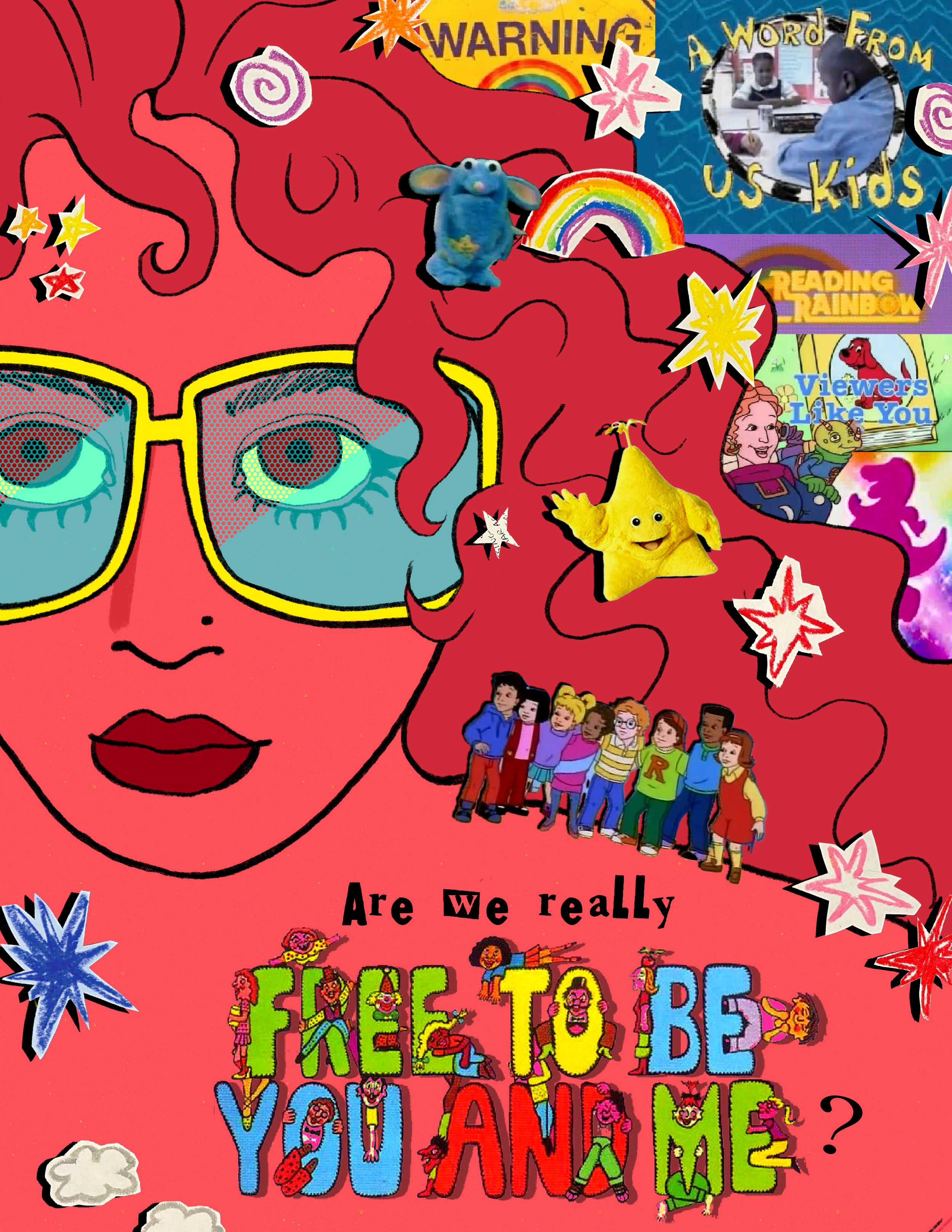
From 4th to 6th grade, I had the best teacher in the world: Ms. Carlson. She taught us about the corners of history that are too often left in the dust. From Howard Zinn’s A People’s History of the United States, we learned about Ida B. Wells and Cesar Chavez, diving deep into their lives and the movements they fought for. Ms. Carlson also showed us the children’s special Free to Be…You and Me, which introduced the class to a myriad of important discussions regarding gender roles, emotional regulation, individuality, and tolerance.
The special was aired in 1974 and was created by Marlo Thomas, in collaboration with Ms. Foundation for Women. Thomas was riding the wave of the 60s, which saw a slew of movements in the United States, including women’s rights and gay rights. Thomas was one of the founders of Ms. Foundation for Women, alongside other activists such as Gloria Steinem, and the foundation was rooted in diversity. Thomas collaborated with numerous actors and musicians to create a children’s special that upheld the values of diversity, inclusion, and tolerance. Through songs, sketches, and stories, “Marlo Thomas and Friends” introduced children to discussions of gender roles and stereotypes, encouraging them to lead with love, kindness, and understanding.
Little 4th grade me sat there, wide-eyed, and instantly fell in love with Free to Be…You and Me. From that day on, I established the belief that every child should watch this special.
The special begins with a title song:
“There’s a land that I see where the children are free / And I say it ain’t far to this land from where we are. / Take my hand, come with me where the children are free / Come with me, take my hand, and we’ll live. / In a land where the river runs free / In a land through the green country / In a land to a shining sea / And you and me are free to be you and me.”
The special leads with hope, which is fitting for the decade in which it was released. A time of turmoil and social unrest sparks a fire that is stoked by hope, action, and community. Sound familiar?
Media in general is becoming increasingly censored, and I worry for the ways it has and could continue to impact children’s media. When lessons aren’t taught in the home or the classroom, media can often mend that disconnect. Whether it’s songs, television shows, or films, children pay attention to what they are consuming, and it has the power to craft their outlook on life.
On the anniversary of 9/11 this year, I stumbled across an episode of Sesame Street that had aired just months after the attacks on the World Trade Center. The episode followed Elmo after he experienced a small fire in the shop of one of his adult friends, Mr. Hooper. Clinging onto another adult friend, Maria, Elmo experiences fear and shock. He just experienced a traumatic event! We observe as Maria reassures Elmo and a firefighter explains to him the importance of the work they do. Elmo gets to visit the fire station, learns about fire safety, and works through his fear of going back to Mr. Hooper’s store again.
In a short episode, Sesame Street teaches a plethora of important lessons ranging from emotional awareness and regulation to basic fire safety. Children walk away learning what to do if they see a fire or smell smoke, and they recognize the effects that a traumatic event may have on them. The key here is that Sesame Street teaches these lessons in a way that children will understand best. Memorable characters, like Elmo, help children connect the dots between situations and themselves. After seeing Elmo interact with the firefighters, children can recognize that firefighters are people they can trust. The visual, sensory-friendly storytelling gives them the space and time to learn important life lessons. Children can relate to Elmo, who is only three-years-old, and can learn from real-world situations on their television screens.
Children’s media shouldn’t just serve as entertainment; it should be educational. Young brains are malleable, and it makes a big difference when children consume material that teaches them about the inner and outer workings of the world. It helps them build awareness about themselves and others. It helps them understand emotions and social situations. Most importantly, it helps them lead with kindness, generosity, and understanding.
The Free to Be…You and Me soundtrack is timeless, and the cast involved reflects the diverse world we live in. It is a gem of a special, and I am eternally grateful that Ms. Carlson took the time to show it to our class. Public Broadcasting Service (PBS) had to close its doors due to a detrimental cut in government funding. Sesame Street was left without a home for months until HBO Max gave it a new place to live. We need to protect the children’s media that highlights the very values that can save our country from the horrors of authoritarianism.
Children are the future, and we must teach them well. We need Sesame Street to remain accessible. We need more Free to Be…You and Me’s in today’s world. If we cut off and censor important discussions, how are we ever going to see a land where you and me are free to be you and me?