
Transcendence
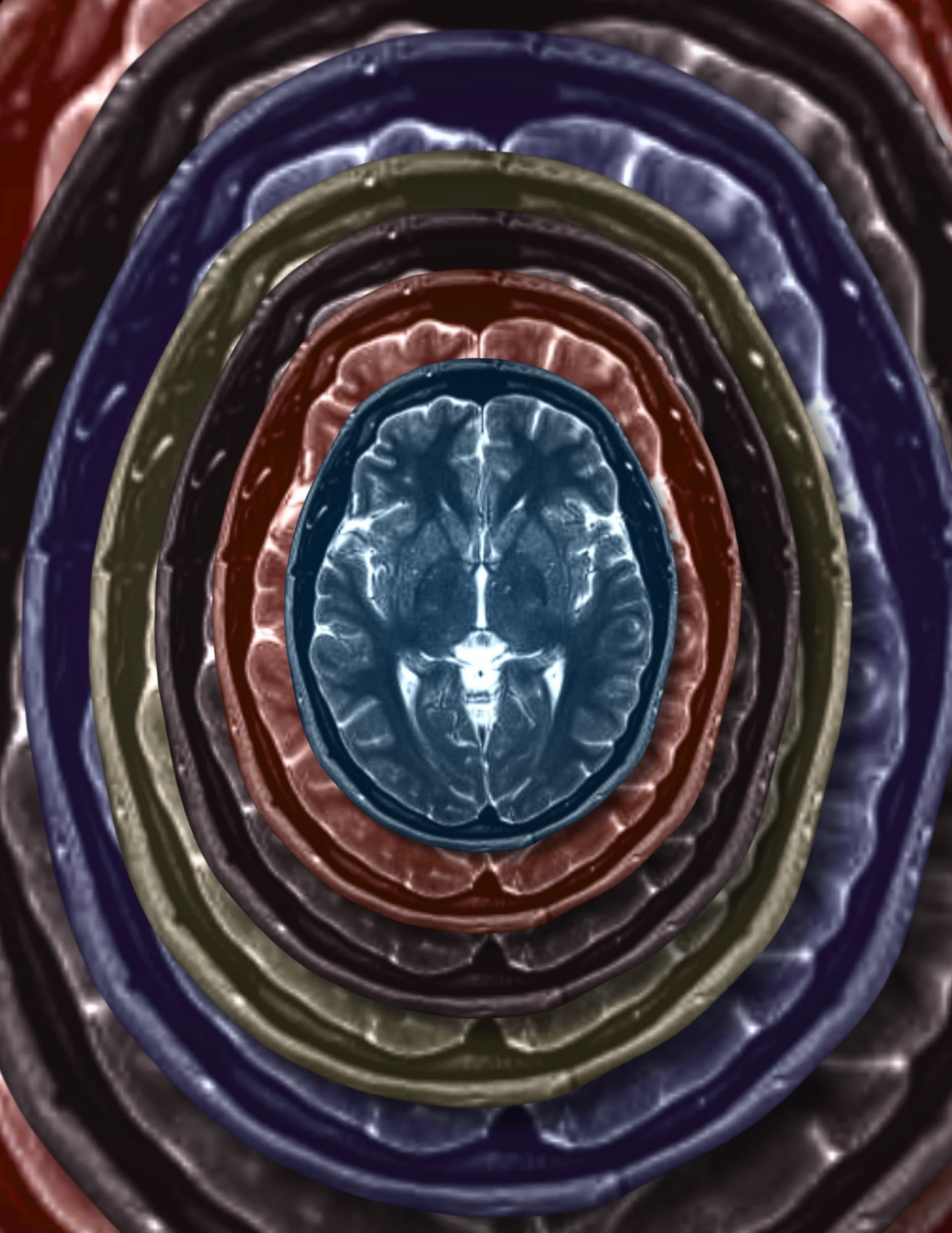
Transcendence
Written by Anna Chalupa
Art by Anna Chalupa
I don’t know who I am, and, frankly, I don’t know what I’m doing. I exist in a “gray area,” the in-between of becoming and being, a liminal space of perpetual questioning. Or, to put it less dramatically, I’m approaching post-grad.
I now find myself staring vacantly at my LinkedIn profile page, laboring to construct a digital self who is simultaneously professional, motivated, personable, and representative. My cursor blinks impatiently in the empty “About Me” entry; I am unable to produce an adequate description. In job interviews, I am asked to explain myself and my future as briefly as possible. I stumble over my words and improvise, never offering the same response twice. Barrages of post-grad questions from my loved ones are ceaseless: Where do I see myself in six months? What passions will I chase, experiences will I gain, milestones will I achieve? What kind of art will I sprawl onto this big blank canvas known as my life? The closer I get to May, the more this concept of self, both internally and professionally, is the subject of every conversation, every event, every thought.
The more I think about it, the more I spiral, the more I truly don’t know. Do I stay in politics, navigating the uncertainty of the current climate? Go to law school, equipped with little to no legal experience? Or maybe I should go abroad, teach English in a foreign country, and immerse myself in a whole new culture. In a world of almost endless options, how is it that I am unable to choose one? Is it a lack of selfhood, a shortfall of character, an overflow of passivity? Perhaps the absence of answers to these questions is not truly an emptiness, but a contradiction. There are too many ways to explain myself, too many things to do.
I’ve always been an indecisive person. My family still recalls the time they set 8-year-old me loose in a toy store, with instructions to choose a toy—any toy! An opportunity for innocent joy turned to restlessness as hours later, I was still wandering the aisles. How was I supposed to decide between a stuffed penguin, a manicure kit, and a 3-D printing pen? How will I know which is the best option for me? Which will bring me the most happiness, last the longest, and make my brother the most jealous? After far too long, my grandfather grabbed me and the stuffed penguin and announced we would be leaving, and what a great choice I had made. But I hadn’t made a choice; I was paralyzed in indecision.
Decision paralysis is related to the psychological concept of “overchoice”: the higher the number of options you are given, the less likely you are to choose at all. More possibilities require more mental strife—weighing options, analyzing different perspectives, considering endless risks. Human brains were simply not created to exist in ambiguity; we seek definitive answers, patterns, and predictability. In fact, most people would rather make a decision that they know will have a bad outcome than one with an unknown outcome. So how can I be expected to reckon with the obscurity yet inevitability of self-development and futurehood?
As many others going through a quarter-life crisis do, I’ve searched for solace in philosophy and psychology. After all, every human emotion has been felt before. 100 years ago, Carl Jung explored decision paralysis not as a permanent setback, but as an opportunity for “transcendence.” While the showy verbiage may evoke images of psychedelics and meditation, Jung’s transcendence is different. It proposes that all this spiraling and anxiety can be boiled down to a reckoning of the conscious and unconscious mind; it is inherent to humanity. Jung’s treatments and overall social views have been (rightfully) critiqued in the past century, but I believe this concept holds a baseline relevance, especially during major life changes:
“Since life cannot tolerate a standstill, a damming up of vital energy results, and this would lead to an insupportable condition did not the tension of the opposites produce a new, uniting function that transcends them” (Jung, 1926).
While arduous, the discomfort and uncertainty of individuation are vital to life progression, as long as they are fully lived in. Entering post-grad, several internal and external conflicts await that cannot be avoided, no matter how hard I try. From job searches to relocations to self-explorations, this approaching era is nothing short of overchoice; my vital energy is surely dammed up. But, I find just a smidge of comfort in knowing that these are the moments that create who I am—when I’m stunned in indecision but act anyway.
Choosing to attend Emerson College after weeks of painstaking deliberation, accepting an internship in the House of Representatives while consulting twelve friends, six family members, and two teachers, or shakily sending a resignation notice to my first minimum wage coffee shop job, which had violated simply too many health codes. None of these life choices came without mental strain, excessive worry, and sometimes chest pain, but I wouldn’t be who or where I am without them. I transcended the self and progressed in life, whether I could explicitly foresee the outcomes or not. And my 12-year-old stuffed penguin has sat happily on my bed throughout them all.
So how do I walk the line between paralysis and transcendence in a world of LinkedIn headlines, endless job sites, and five-step interview processes? I still don’t know that part—yet. But even if I don’t know where I am going, I’m going. So, I will navigate the unknown nature of the approaching world, trusting that from this arises the very formation of who I am, have been, and will be. Self-actualization is in itself contradictory. Maybe, sometimes, I don’t have to know; I’ll just become.