
PTSD
PTSD
Written by Lauren Mallett
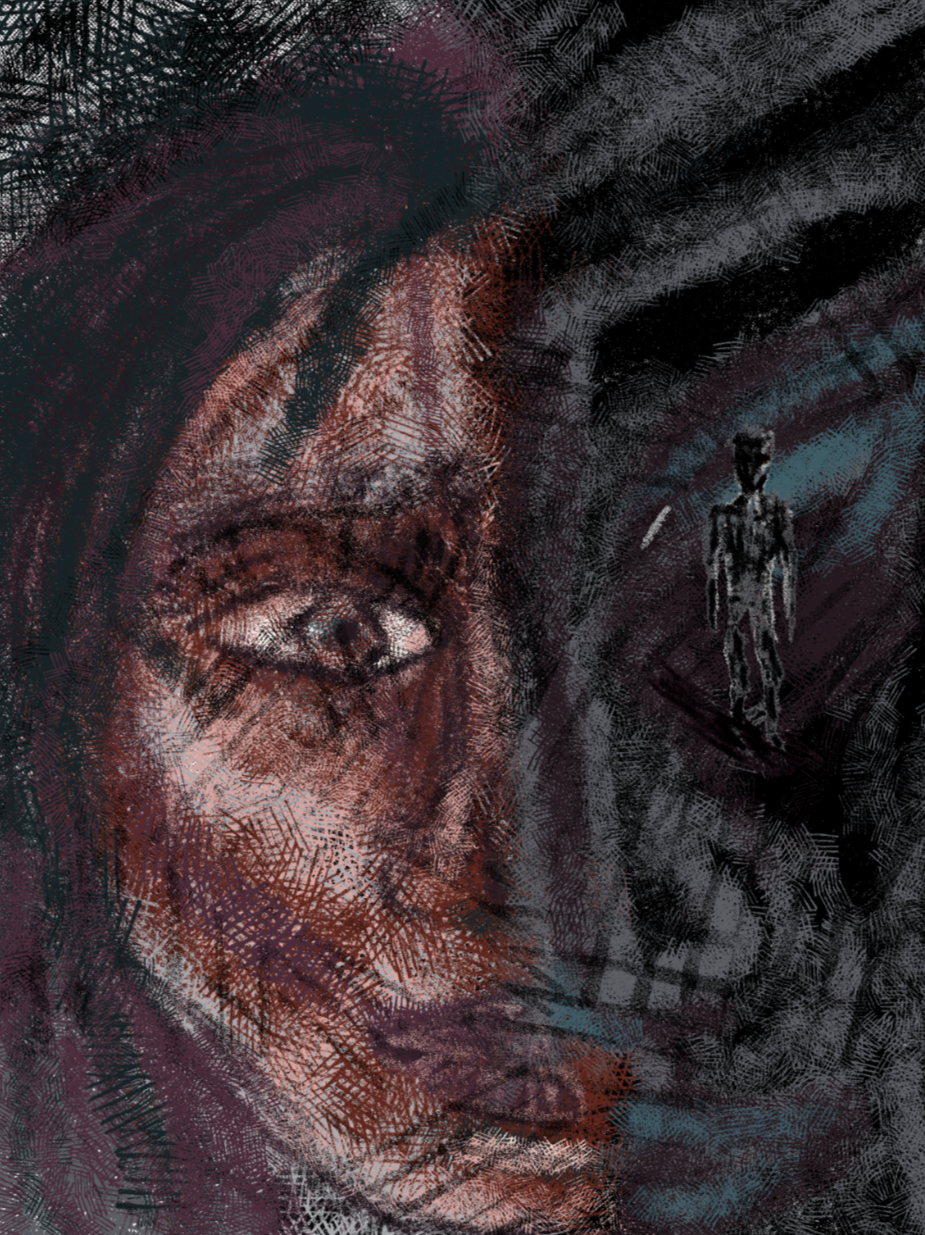
Art by Izzy Maher
How do you move when you’re too afraid to blink? How do you scream when you’re too afraid to breathe? Post traumatic stress disorder, or PTSD, is defined by Merriam- Webster as “a psychological reaction occurring after experiencing a highly stressing event…that is usually characterized by depression, anxiety, flashbacks, recurrent nightmares, and avoidance of reminders of the event.”
Halfway through my junior year at Emerson, I was diagnosed with PTSD. My diagnosis was a long time coming. It was a concept my therapist had floated once or twice before, but it wasn’t something I was ready to fully talk about, let alone accept about myself. After three years of appointments, I finally felt safe enough to tell him about my high school boyfriend for the first time. He had hit me, and I spent the rest of my high-school career on the constant verge of a panic attack, terrified that he was around every corner. This, in combination with other uncomfortable and traumatic experiences with men in my life, slowly avalanched until I could no longer deny the possibility. The final nail in the coffin was the multiple instances of stalking I experienced on Emerson’s campus. The panic attacks and constant looking over my shoulder sent me over the edge, bringing me right back to when I was 15 and hopeless. When the floodgates opened during my therapy Zoom call, there was no damming it back up; My therapist officially diagnosed me with PTSD in January of 2025.
Post traumatic stress is difficult to deal with. During the day, I dream up worst case scenarios. In my sleep they transform into nightmares that feel far more realistic than I would like to admit. I constantly scan every room I’m in or sidewalk I’m on, looking for signs of danger, for those familiar faces that haunt my nightmares. Dealing with PTSD on a relatively small college campus is another world entirely. Every hallway of the Walker building is suddenly an obstacle course, a fight to avoid confrontation. No longer was running up five flights of stairs the cause of my overly intense heart rate, but rather finding that he was sitting outside my classroom, waiting for me to arrive. There have been far too many times when I’ve broken down in the fifth floor Walker genny neutch, hoping that nobody walks in since the door’s lock is moderately broken. I’ve become all too familiar with the backroom-esque staircases that nobody else takes, and I’ve spent my fair share of time in the Healing and Advocacy office.
When I was diagnosed with major depressive and general anxiety disorders during my teenage years, I felt relieved. Here was proof of the hurt in my mind, of the struggles I was facing day in and day out. Pen to paper, there was a viable explanation for what I was going through. Sometimes it feels like everyone our age has anxiety or depression. There’s almost a comfort in putting a name to the feelings, and finding solace in the community of those struggling with similar things. So why, when I was diagnosed with PTSD, could I only feel shame and fear?
I sometimes feel ashamed of my diagnosis, almost as if I didn’t earn it. I didn’t fight in a war, I didn’t survive a catastrophic natural disaster. My post-traumatic stress stems from a series of traumatizing situations with men throughout my life. It’s something that so many women go through—the abusive boyfriend, the preying groomer, the stalker creeping on your college campus—so what makes me special? Why do I get the privilege of having my experiences validated by a diagnosis?
UN Women reports that “An estimated 840 million women—almost one in three—have been subjected to physical and/or sexual intimate partner violence, non-partner sexual violence, or both at least once in their life.” The National Domestic Violence Hotline reports “1 in 6 women…in the US have been a victim of stalking at some point during their lifetime.” These events are so incredibly common for women around the world. Every day, women are subjected to gender based violence, with many living each day in fear of what may happen if we leave the house. We talk about how men treat women, but with the lifetime prevalence of PTSD in women sitting between 10–12%, according to the National Library of Medicine, it doesn’t add up with how little we talk about the long-term impacts.
I have found that people our age don’t talk about PTSD, and even less so do our elders. Through sharing my story with close friends, I’ve had a shocking amount of them confide in me that they too share my diagnosis and have been through eerily similar experiences. Only a few months ago did a close friend reveal that she had also experienced stalking on campus, and I now find myself in the same boat she was in, fearing the inevitable of a graduation ceremony run-in.
We throw around anxiety, depression, ADHD, and all sorts of diagnoses like jokes on a regular basis, treating them with lightheartedness to take away from the shock and intensity of our experiences. Gen Z-ers joke about their “trauma-bonds” and how they’re “soooo mentally ill” all the time, yet when someone drops the big four-letter acronym, the energy switches. No longer is it an acceptable thing to joke about, no longer do we keep it casual in sharing our stories. There’s a much more solemn tone that takes over, and it often feels like pity. The first time I shared my diagnosis with my family, I leaned on a joke for comfort. A poor response at the moment, yes, but a default coping mechanism that many people rely on. Instead of laughing along with me, all of their faces fell, and suddenly I felt my power slipping away as I was once again a victim.
PTSD is no joke. It’s a serious diagnosis, and nobody should have their experiences invalidated with jokes or snide comments. However, the power to take back control and make those jokes yourself, to make light of your own pain, should be an option. Nobody should feel ashamed for what they’ve gone through. We should be able to discuss our stories in safe spaces without fear of being looked down upon, of being treated like a victim rather than a survivor. People cope in all different ways, and there shouldn’t be a sense of shame when those coping mechanisms carry over for those with PTSD. A PTSD diagnosis is not something to be ashamed of, and nobody should feel like a burden because of what they’ve gone through. Sometimes a joke is all it takes to make those steps towards acceptance, towards knowing that this thing does not define you. So, if you want to shame me or make me feel bad for how I cope, go right ahead. I already have PTSD, how much worse can it get?