
WAIT WHEN DID THE INTERNET GET SO BLEAK?
By Liz Mazzola
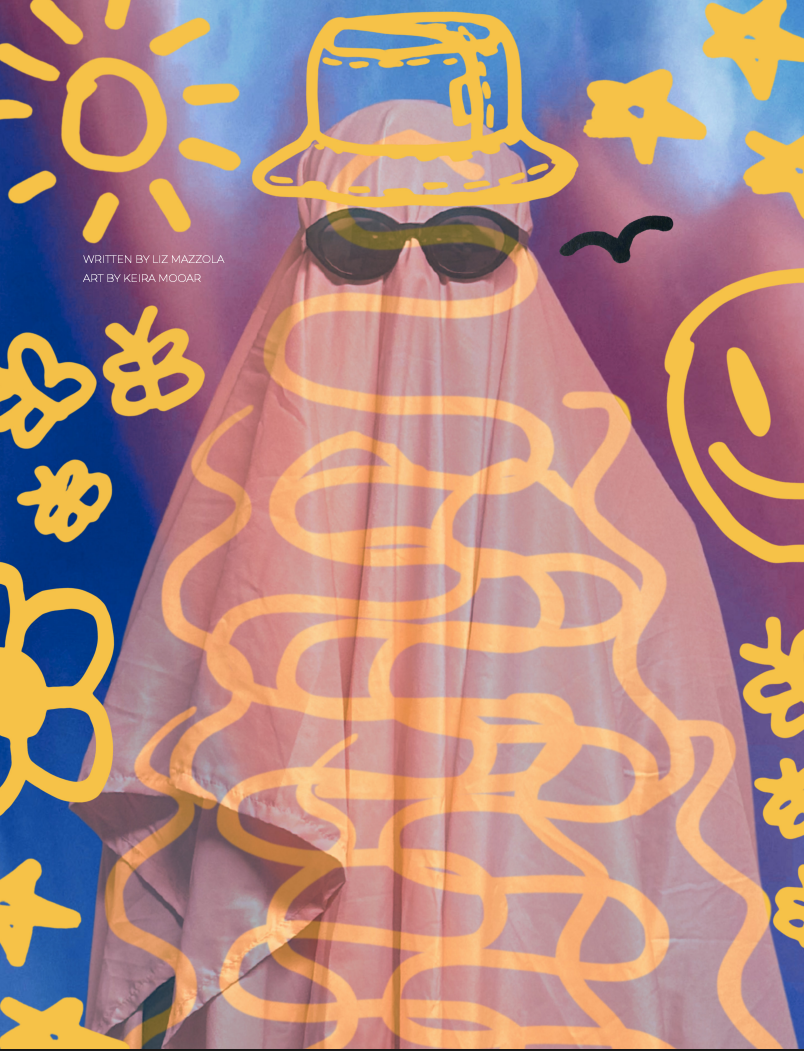
Art by Keira Mooar
A few weeks ago, I was scrolling on TikTok when suddenly, my feed was swarmed with nostalgia bait. Every scroll offered another edit of intensely saturated VSCO photos, 2014 galaxy print videos, edgy ghost photoshoots à la 2019, and Bath & Body Works hauls. These edits, paired with the recent call on social media to “bring back 2016!”, point to one thing. People yearn for what the internet used to feel like.
The truth is, Gen Z’s online presence has undeniably changed in a significant way since the early 2010s. Instead of the carefree fun these “nostalgia bait” edits depict, opening social media today guarantees scrolling through hate, judgment, and increased anxiety surrounding our digital presence. This begs the question: Has social media itself become a darker platform, or has the way Gen Z communicates with one another changed as a whole?
When discussing the pre-2020 internet, the elephant in the room is the rupture point in our generation: COVID-19. There is a defined before and after that evidently traumatized every part of our generation, and I question whether the digital landscape only feels darker because we view everything before 2020 through rose-colored glasses, or because the online ecosystem has truly lost this “whimsy.”
Gi DiFebbo, a 24-year-old actress who started her social accounts way back in 2014, is one of the Gen Z social media users who agree that the internet “just feels more bleak” nowadays, reminiscing about a time when “people were just there to have fun.”
This carefree approach to social media did not last, as being online today feels more like a headache than a party. Where did all this fun go? Two words: cringe culture. Cringe culture refers to the tendency of people online to mock and ridicule someone who’s acting in a way they deem uncool, awkward, or embarrassing. More often than not, being “cringe” goes hand in hand with acting authentically.
DiFebbo recounts watching the fear of being cringe grow from the late 2010s on. “Remember that word ‘cheugy’? I think that’s when it started. People slowly started to drag everyone for not being cool enough.” This obsession with being cool, with behaving “nonchalantly,” is what I personally believe is the biggest poison to social media culture.
To get a younger Gen Z’s perspective, I sat down with Gianna Goldstein, an 18-year-old student at Pratt Institute, who joined social media in early 2020, a time she feels was right before cringe culture started.
“When we just began lockdown, no one cared about being cringe online,” she says. “We were all suffering together. The internet was a fun way to let out pent-up emotions.” She recalls making silly dances, watching awkward ukulele tutorials, and a general lack of fear of judgment. The internet remained our escape, a place we could be ourselves and not worry about being uncool. Because, you know, we had bigger things to worry about, like the global pandemic.
Once the lockdown lifted, cringe culture took over social media with a vengeance. “We started getting back into the world, and so people online started to get more judgemental,” Goldstein says. Difebbo agrees with this post-pandemic shift. “During COVID, you could do whatever online, and then once we got back
to the real world, it all started to feel so serious.” We are yearning for a time when life didn’t feel so serious. We grew up, left our 2020 energy behind, and suddenly became hyper-self-conscious in a way that poisoned our self-esteem. Thank you, cringe culture.
But it’s not just the cringe of it all or the lack of hauls that’s made the online world feel darker. The stress of the internet has become interwoven into the way it works as a whole. After 2020, when the number of social users massively increased due to the global lockdown, suits at Instagram and TikTok started to zero in on creating hyper-specialized “For You” pages (You know, the ones that become frighteningly catered to your interests in an attempt to keep you scrolling until your eyes bleed). According to Campaign Live, the “For You” pages use interest graphs to show people anything that will get them to stay longer. Unfortunately, the thing that keeps most people glued to their screens is divisiveness. It’s all about engagement in order to produce more money for these platforms. Our eyes, our time, and our brains are their payment, and they want our attention in any way they can get it.
The good news: there’s hope for Gen Z to bring back a brighter online presence. Recently, trends like “make Instagram casual again” are encouraging people to stop caring so much about what they post and start having fun. “Recently I’ve seen more people post in the way that they used to, which is really fun to see,” DiFebbo says. “I think we’re once again realizing, ‘wait, it’s actually not that serious.’” People are so fed up with living in such a strictly critical online world that we may be heading back to digital positivity.
Judgment will always exist online, whether we like it or not. But we get to decide who is a part of our online world, just as we do in our real world.
“Now that I’m here at Pratt, I feel like we’re all pretty cringe in a way. Judgment is just not woven into the culture as it is in other places,” Goldstein says. “It all depends on who you surround yourself with, in person and online.”
DiFebbo leaves us with this wisdom as an older member of Gen Z’s internet. “As you get older, you start to really not care. Cause at a point, it simply doesn’t matter. Who cares?!” We have the power to build our own community, and decide whether we want to live in authenticity, or revel in the fear of “acting cringe.” Because after all, to be cringe is to be free. Yes, I cringed while writing that last line. And that’s okay. YM