
If Birth Feels Like Death to the Baby
By Ella Donoghue
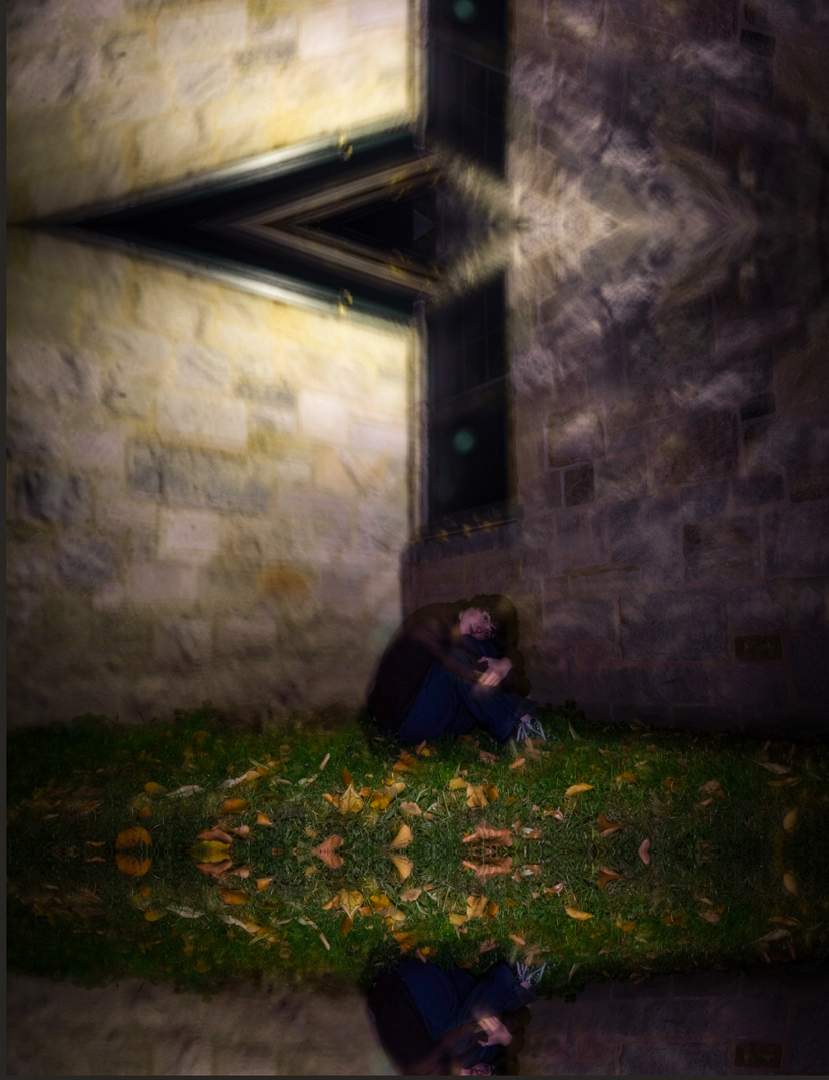
Photography by Eliana Vega
Last week my card declined at the bar. This week I penciled “hang out socially” and “have sex” into my calendar, squeezing them in between class, work shifts, and meetings. I could’ve sworn life used to be fun.
In the past year, I’ve had to learn to do things I admittedly used to ask adults to do for me, or things I’d never faced before, like replacing a smoke alarm battery that won’t stop chirping. Calling the bank. Sending scarily professional emails. Cancelling subscriptions for workout classes that are unnecessarily difficult to cancel. Paying rent. Worst of all, I even suffered through one very uncomfortable trip with my friends to urgent care, due to an emergency situation involving a stuck menstrual disc. Each of rhese mortifying realities made me feel stupidly unprepared and inexperienced.
Living on my own for the first time, graduation looming, I find myself constantly feeling like a newborn baby. It’s as though I spent my first two decades developing inside the warm, protective womb of adolescence, and abruptly, I am expected to emerge as a capable adult.
“Birth feels like death to the baby” is a quote from Irish writer John O’Donoghue. He says that the infant is traumatized by its birth, experiencing its own beginning as an ending. The newborn involuntarily cries and reaches for its mother in a desperate, confused attempt to regain a sense of familiarity amidst the novelty. Leaving the home that had been made purely to foster its growth, ending the once indivisible connection between child and mother, and being introduced to senses and consciousness must feel like death. Or at least, the end of comprehensible simplicity. Reality is instead something unknown and drafty, strange and bright; after its involuntary relocation to the delivery room, the baby is terrified, incapable of imagining what new wonders await. “This is not the life I knew,” we can imagine the newborn thinking, if it were capable of thought.
I’ve been through enough endings—life-ruining breakups, downfalls of ephemeral friend groups, closing doors to old dorm rooms and childhood homes for the last time—to understand that all kinds of finality can be mournful. Sometimes the end of an era comes with the knowledge of its impermanence; the ending announces itself like a cue that ushers you straight into your new beginning. Whatever version of you has died, you quickly bury it, walking backwards toward your future but still gazing upon the gravesite, teary-eyed and grieving, understanding that you will soon become someone different. In these times, though the ending is sad, the future is imaginable and exciting. You can foresee how the death of your former self will allow a more evolved version to emerge.
Other endings—like the realization that childhood is long gone while adulthood remains an overwhelming mystery—might cause you to feel like the newborn baby, who does not know how it will grow. Who is blind to the reality that it is evolving, and will continue to forever; that soon it will learn the shape of its own hands, the rhythm of sleeping and waking. That the world it entered so unexpectedly and unwillingly will eventually contain its favorite song, its first kiss, its friends and their favorite bar, the people it will love and the places it will call home. If birth feels like death to the baby, how much endless beauty can we expect to arise from all the sudden, terrifying endings we are thrust into?
Standing on the precipice of adulthood, staring out toward the foggy abyss of the unknown, there is no obvious moment of becoming. There is only an accumulation of unfamiliar experiences that make us spiral until we become dizzy, distorting our view of what lies just ahead so that it seems insurmountable. We learn how to budget and manage time and send important emails for the first time like babies turning their babble into language: Unaware of exactly what you’re doing—or that you are doing anything at all—until suddenly and without your own recognition, you’re speaking words you hadn’t noticed you’d been learning. YM