
Bye Bye Miss American Pie
Written by Addison Brenizer
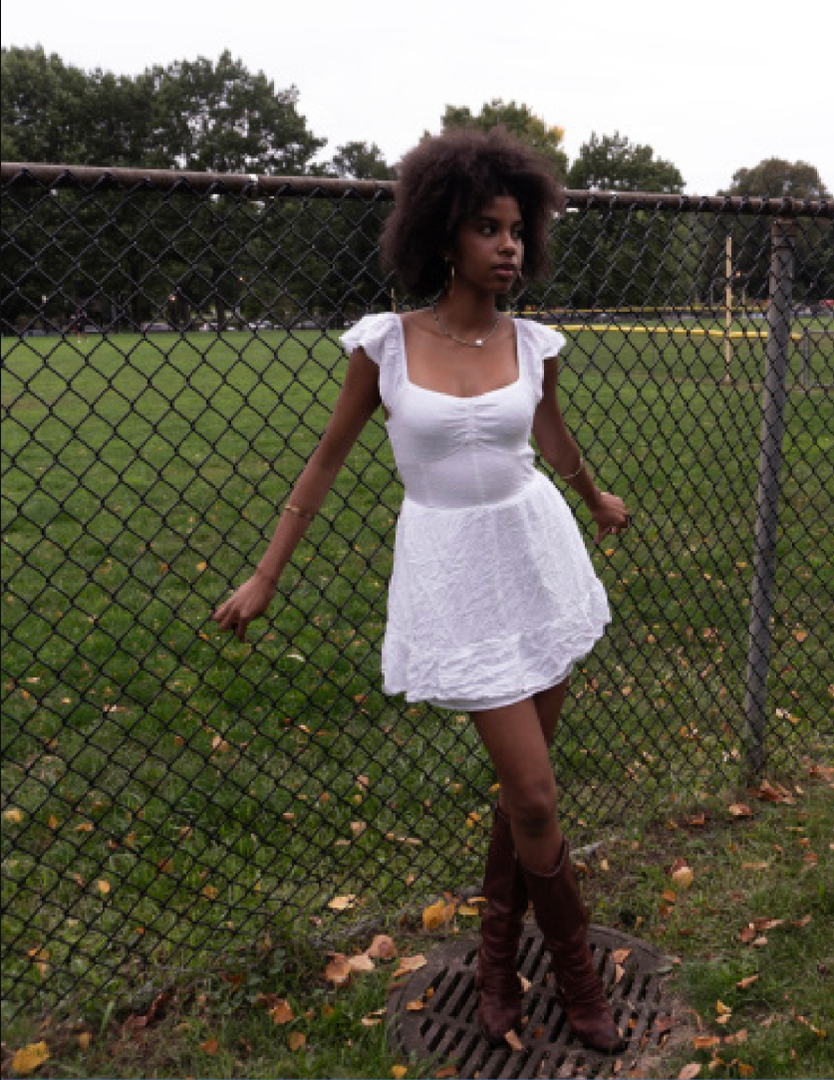
Photography by Ema Sabau
Music “died” on Feb. 3, 1959. Three rock ’n’ roll stars—Buddy Holly, Richtie Valens, and J.P. Richardson—all lost their lives in a plane crash while on tour together. Between their deaths and Elvis Presley’s military service, rock ’n’ roll was fizzling out. A product of the 1950s post-war economic boom, now the popular culture had to change with the decade. Hippie counterculture took precedence, and genres like folk rock and Motown became vehicles for political commentary rather than mere entertainment.
Don McLean’s 1971 “American Pie” turned this shift into an epic as his narrator observes the idyllic 1950s evolve into the political turmoil of the 60s. The song is teeming with small references to the late 1960s: the verse about the football game refers to the Vietnam War; “Helter Skelter” references the Manson murders; and the mention of James Dean is a callback to the tail end of the Golden Age of Hollywood.
McLean wrote within a far more unified cultural landscape, where these references were widely recognizable. Everyone watched the same movies at the cinema, wore the same clothes advertised in popular magazines, and listened to the same music on the radio. Generation Z’s experience, especially with Internet access, means that we get to engage with media beyond what is mainstream. There is no singular “day the music died” for Gen Z; it could just as easily be the long-lasting effects of 9/11 as it could be the coronavirus. How do you package CGI remakes, the natural texture of 35mm film, tote bags, maximalist jewelry, flannels, and TikTok, which produces trends and references faster than any user could possibly absorb, into one epic?
Considering this fragmentation, a modern “American Pie” for Gen Z would be nearly impossible. Writing lyrics that touch upon every possible cultural reference from the past thirty years would be hard, but even choosing a genre would be impossible. Would it be more representative to use the emerging genre of bedroom pop, industrial hip-hop, or of folk punk? As a generation with nearly unlimited streaming access to music across decades and cutting-edge music-making technology, we are no longer limited to what’s on the radio. We are free to develop our own tastes in music, and with that, our own stories and experiences surrounding the way that music makes us feel.
We asked some of our peers if there was a song that summed up their experiences being young in America. At first, this was to get a sense of what song could be our generation’s “American Pie,” but interestingly, we never got a repeated response. Every student had a different answer, from The Strokes’ “Someday” to Mac Miller’s “The Spins” to Everybody’s Worried About Owen’s “Dreaming.” We’ve consolidated the songs into a YouTube playlist. There’s everything ranging from The Beatles to Pitbull.
Many of our peers had multiple answers as well. When one person would answer, everyone around would nod in agreement, or their answer would cause them to remember another song by a similar artist or in the same genre. Some even had specific songs for specific moments of their lives, like Corinne Bailey Rae’s “Put
Your Records On” being their forever “song of the summer.”
One thing we find interesting about the answers is the time period range. Someone was just as likely to name a Simon & Garfunkel song as they were to name a song by Olivia Rodrigo. Gen Z refers back to older music to articulate their experiences. Part of the reason is access. Music is preserved and passed down, so we can listen to songs that would’ve been lost to time otherwise.
Furthermore, the messages of these older songs still resonate today. Take Billy Joel’s 1977 “Vienna:” there is something deeply relatable about the need to “slow down” and “take the phone off the hook and disappear for a while.” Joel was writing about needing to take a break from ambition, but “Vienna” is easily applied to the constant consumption of social media and the comparison it invites into our lives. A song being “from another time” does not prevent listeners from relating to it today.
When my earlier question was inevitably turned back onto me, I had to begrudgingly admit that my personal “American Pie” was, in fact, Don McLean’s “American Pie.” That said, I wouldn’t want a modern version of it; it wouldn’t encapsulate our lived experiences. A playlist would be the better option, hands down. We do not limit our tastes to one genre, artist, or album, so why should we try to confine our experiences to one song? YM