
Confessions of Not-A-Multi-Hypehenate
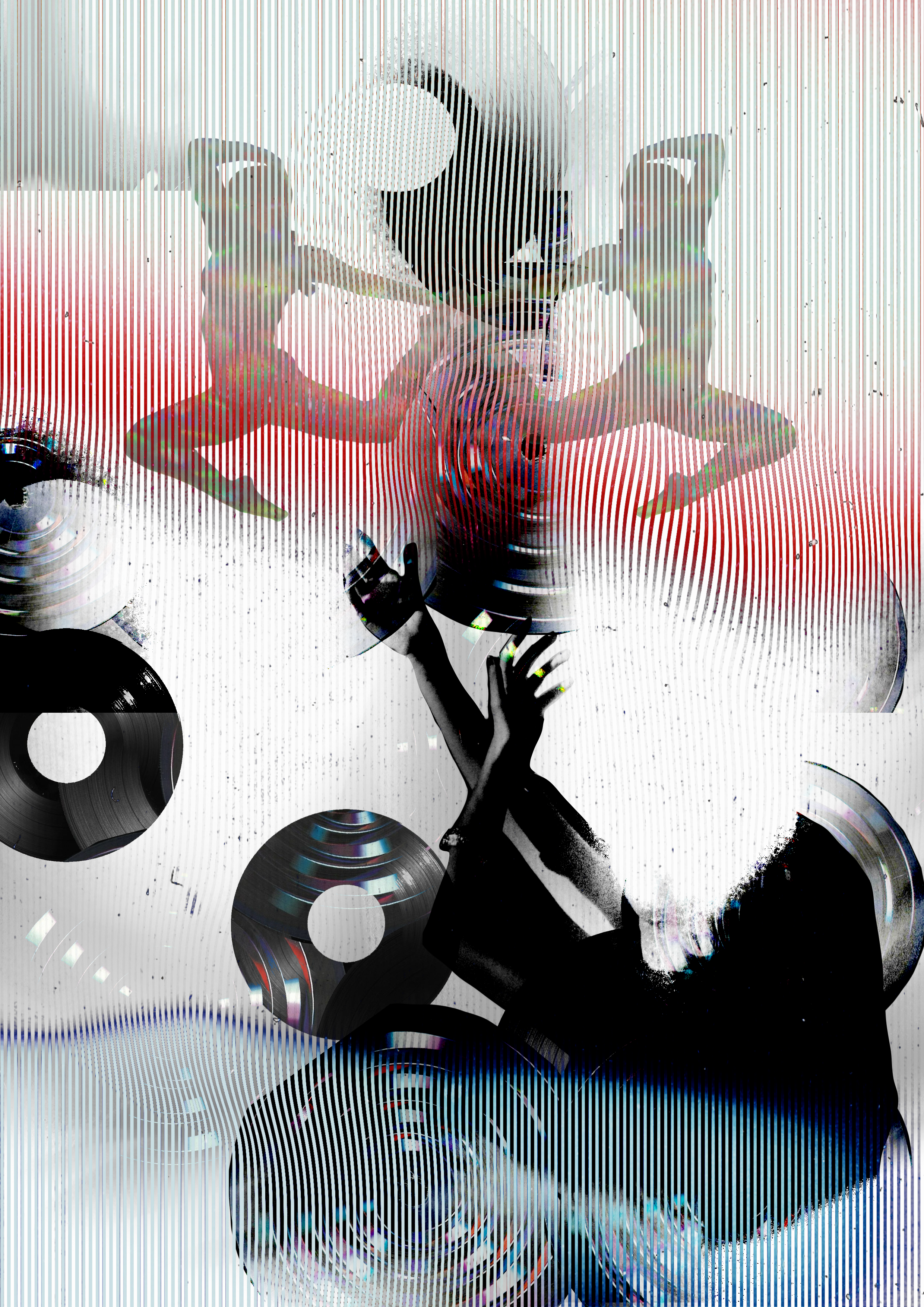
Confessions of Not-A-Multi-Hyphenate
Written by Kat Boskovic
Art by Izzy Maher
In 2026, the newest emergent trend is learning how to be a kid again. Amid increasing awareness of social media’s toll on mental health, countless users now share their journeys rediscovering the joys of painting, knitting, swimming, sewing, and more. On paper, this trend is a welcoming shift toward inspiring wonder rather than obligation, offering a chance to reconnect with curiosity, playfulness, and skills long set aside. By exploring multiple facets of ourselves, we’re reminded that life—and identity—doesn’t have to be confined to a single talent optimized to the extreme.
The implication, of course, is that we all have these dormant selves on standby for revival. As impressionable I am, I began to take stock of my own childhood pursuits—only to realize I never had many facets to begin with. I figure-skated for eight years, but those Sunday afternoons at the ice-skating rink were treated as a mere social event. Growing up with European immigrant parents, it was unquestionable that I would be put into youth soccer, but it became clear very quickly that I was not blessed with athletic genes. I even played the violin until I was thirteen, but only because my mother, a musician in another lifetime, was persistent in living vicariously through me.
There is one dreadful moment for the hobby-less adolescent: the ever-quickening approach of high school graduation, when you must decide what you will be before you’ve had the chance to be much of anything at all. When I was sixteen, I contemplated going to fashion school in New York City and wearing those seven-piece ensembles I saw girls effortlessly adorn in blurry photos on social media, but I couldn’t draw (much less sew). My freshman year of college, I thought I would make films—those interior films with complex female characters and sets littered with half-empty perfume bottles shaped like a stiletto or stem of a rose—but I can’t even remember how to change the settings on my own digital camera. Or I thought of being a rockstar, with studded bras and silver eyeshadow spilling like a hundred moons from my eyes, but apart from those eight dragging years of violin, I had no experience in music. I mused on reveries of life as a painter, sculptor, set designer, and jewelry maker, but each poked at a fatal flaw. I was a one-note flute, a mono-skilled specialist, a one-trick pony. Friends around me toil their days knitting and sketching and playing the piano, but all I do is arrange and re-arrange words on a Google Doc. Sure, I can write in various mediums, from fiction prose to playwriting to cultural criticism; sure, I can even leave some comments on articles that come my way and pick up a few copyediting internships; but I’ve honed one edge while everyone else sharpens a whole set of tools. In a world of jacks of all trades, I’ve only got one thing.
In a gig economy where even professionals with nine to fives in the office must take on side hustles like food delivery, social media management, or pet-sitting, the opportunity of “easy extra cash” starts to feel less like an opportunity and more like a baseline requirement to survive—a baseline requirement barricaded by a personality test I’m uniquely unqualified to pass. I can’t ride a bike without faceplanting, my technological ineptitude is no match for even the most beginner-friendly design platforms, and I unfortunately hold a deep repulsion toward animal feces. While my friends sell their crochet sweaters for $25 on Etsy, I resort to selling my personality in the retail industry.
Faced with this narrowness, I turned to the original patron saint of selective competence: Jack Kerouac, whose résumé seems to include little beyond drinking, hitchhiking, and, evidently, not revising. In a 1962 piece for WD, Kerouac addresses the question “Are Writers Born or Made?” by writing, “Genius gives birth, talent delivers. What Rembrandt or Van Gogh saw in the night can never be seen again. Born writers of the future are amazed already at what they’re seeing now, what we’ll all see in time for the first time, and then see imitated many times by made writers.”
Though Kerouac may not be a golden moral compass to follow, he still suggests a lineage of seeing: that someone, somewhere, has already looked at the night, at life, at words, and witnessed something that no one else could witness in exactly that way. Perhaps I am not a born writer but simply made; perhaps my obsession can be entirely attributed to the tumultuous home I grew up in where I first found solace in books, then realized at only six years old that if I wrote, I could build the world I would escape to with my own small hands. Writing entered as a language of possibility: I could invent a street, a conversation, a character, a life. There was no point in ballet or competitive swimming or theater, all too tethered to the barre, pool, and stage, when I could render by my own left hand the physical confines of my own world obsolete. Each story scribbled could be an act of creation to hold order against disorder.
But the more I think of writing as a means of constructing order out of disorder, the less certain I am of what that says about my own ability. To Kerouac, talent delivers what has been seen; genius glimpses what no one else could, briefly and unrepeatably. I am painfully and fraudulently aware that I am the former—a single edge honed, precise, painstaking—but it is an edge born of necessity, of a deep desire to witness and hold something original. I birthed a writer out of myself, a tedious and compulsive writer who lives only to excavate her life. Or rather, the excavation gives reason to live. Others might bake, birdwatch, play the guitar; they might even know how to ride a bike. But I rearrange words, untangle sentences, build civilizations from the fragments of my own experience—and in doing so, I survive. My skill is narrow, perhaps laughably so, but it is mine. It is the one way I have learned to see, to endure, to give shape to the twofold absurdity and beauty of a life that is too large for a single body to hold.
On my fourth pilgrimage back to Barcelona to come out of my party girl retirement (perhaps a second talent of mine), I met a forty- something-year-old man at the hostel bar. Between my college bubble and the jewelry store I work at which only attracts girls in their early twenties, I rarely share space with someone so far beyond the age of my peers; and shockingly, he had no intentions of hitting on me. Four sangrias deep and one “woman in male fields” accusation later, I told this man who had lived many lives, from fisherman on the Mediterranean to banker in London, that I was petrified not of uncertainty, but of certainty—to be so convinced of my own conviction in being a writer (albeit a writer of talent, not genius) that I would prevent myself from being anything else. I even referenced Oscar Wilde: “If you want to be a grocer or a general or a politician or a judge, you will invariably become it; that is your punishment.” If each day I was sure of who I was and what I knew, I could never live the dynamic life Wilde spoke of, could I?
Of course, the fact that I had memorized and recited a quote from Wilde evoked a chuckle on his part. He replied, and I paraphrase: “I’ve spent over twenty years searching for my calling, for anything that made me feel alive. Not many people have that. They trudge toward their degree, land an office job filling out spreadsheets, live for each paycheck so they can support their families, or” —gesturing toward ourselves— “drink themselves into oblivion in foreign countries. To wake up and know exactly what you know and what you will do with it is a fortune. It will keep you alive.”
Clearly we had drunk a few too many sangrias at this point to be so dramatic, but I felt he had touched the nucleus of my existence— the dense, charged core of fear and desire, curiosity and doubt, the tiny spark around which my obsessions, anxieties, and compulsions all orbit. My obsession, however narrow and tedious it is, is enough. I may not cook, draw comics, or even hit the right note on karaoke night. I may never be a jack of all trades. My one skill may be what Kerouac calls talent rather than genius; Wilde might call it a self-shackling form of certainty. I call it, simply, the only way I know how to keep becoming.