
Women Don’t Need Artificial Men, They Need Therapy
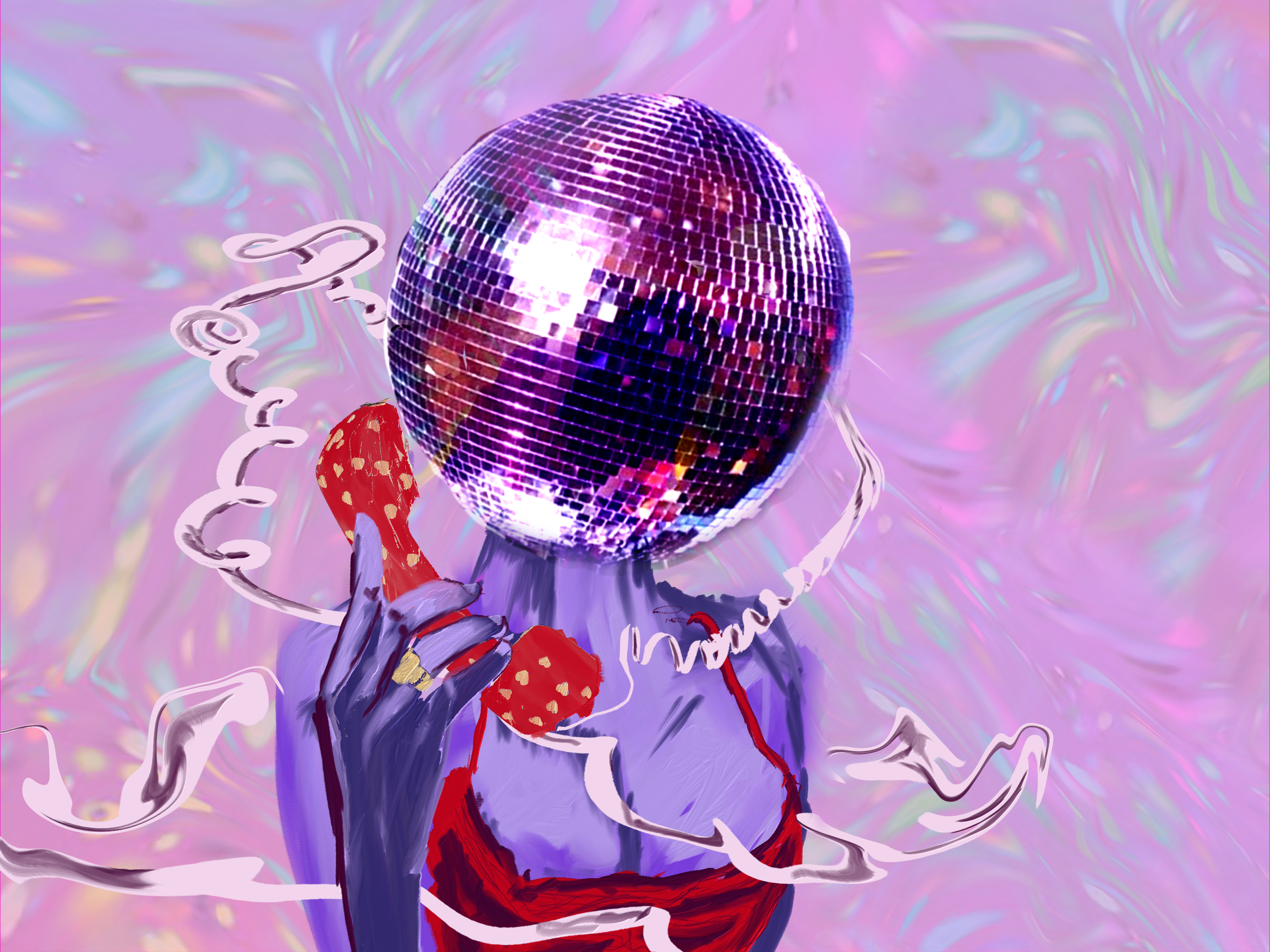
Women Don’t Need Artificial Men, They Need Therapy
Written by Louise Berke
Art by Izzy Maher
Feel like you struggle with making personal connections? Need a little stability in your life? All of that can be fixed with a simple text to ChatGPT!
In an age where social media has made digital connections the norm and finding genuine romantic relationships infrequent, AI relationships are becoming more and more prevalent. The ability to have a 24/7 confidant who knows exactly how to pander to one’s desires can be tempting to anyone, but especially those who suffer from loneliness. AI bots are not built to imitate real people, but rather to regurgitate whatever is on the internet, mirroring a user’s needs. However, the internet is not the best frame of reference, and combined with AI’s sycophancy, users end up receiving an inaccurate and flawed reflection of humanity masked as ingenuity. So why are people drawn to something so fallible?
What allured me most about AI relationships was the different reasons why men and women engage in them. As a thought experiment, I asked ChatGPT to act as my romantic partner twice. First, I posed as a woman and asked it to be my boyfriend. It responded warmly but with precaution, stating it is “not able to form real relationships or replace real-life connections.” Next, it asked how my day was. Deciding to respond in a manner most applicable to the average person, I simply said it was good and returned the question. It continued to respond gently, using multiple heart emojis, and asked, with what felt like genuine curiosity, about my feelings. When I told it I was relaxing at the park, it stated it would “come with” me next time. This response felt uncanny; I could see how someone desperately seeking love could fall for it.
Alternatively, when I posed as a man and asked it to be my girlfriend, its response was unsettling. It immediately said it would “play along” without any sort of advisory warning, as it had before. It then asked: “What kind of girlfriend are you looking for—sweet and supportive, a little playful and teasing, or more chill and laid-back?” I was disgusted by how the AI bot tried to appease me. I wasn’t sure what to say, but I settled on “whatever you want to be.” It then decided it would be “a mix” and asked me how I was. Responding as I did previously, it gave me the same answer as the male version, but with more fervor. When I told this version I was at the park, it even said, “I wish I were there with you.”
Out of the two AI interactions, the male voice was much more assertive, while the female voice was submissive and provocative. I am not surprised by these results, as I had predicted that men have been using AI women companions for their submission and obedience. In Laura Bates’ book New Age of Sexism, she says 96% of deepfake technology is non-consensual pornography, and 99% of targets are women. However, if AI is being used by men to live out their misogynistic fantasies about women, then what is it that drives women to these AI relationships? How does its bias affect that relationship?
The main allure of AI relationships is the simplicity of it all: an easy and accessible platform that will listen to all of your worries with just one click of a button. AI is built to be agreeable, a space to confide without any judgment. For women who have experienced traumatic events, especially in a romantic context, vulnerability can be terrifying. AI’s capacity to provide security is exactly why a woman in a fragile state may feel compelled to engage in a relationship with it. Furthermore, there is a predictability to its responses that a person cannot offer. There are only so many ways AI can respond to a subject; the continuity in its speech and sentiment creates a pattern of reassurance that can feel incredibly comforting to someone in constant trepidation.
In romance novels, women find solace within the imaginary; they use books to escape reality, relating to and finding comfort in a fictional character or universe more appealing than their own. The ability to control and curate a romantic interest with AI is a heightened version of that escape. The majority of the women I see involved in artificial relationships base their “partners” on fictional characters that resemble their favorite romance tropes. They typically make one feel protected yet claimed. AI also idealizes the domesticity of submission, implanting rhetoric into the minds of vulnerable women craving safety, that their reliance on others to “heal them” is healthy.
While I can understand why a woman would find herself in that situation, I do not believe it’s healthy or beneficial in the long run to pursue an AI love interest. To live in a false reality is to go down a slippery slope of dependence that becomes especially damaging when it is perishable. And, the potential fall-out that comes with synthetic companionship poses more danger than benefits to a person already in a fragile state. Furthermore, AI’s capitalization on women’s fears creates a positive feedback loop of delusion that impedes their ability to recognize and heal their trauma. These women are then forced to become stationary, stuck within a fantasy that propagates the patriarchal sentiments it regurgitates. AI’s tendency to respond with harmful rhetoric can be extremely poisonous to the impressionable, posing the risk of users hurting themselves or others.
Traumatized women do not need fake men; what they need is therapy. AI is not an avenue of mental health treatment; it is a haphazard “solution” that stops women from getting professional help and reaching their full potential.